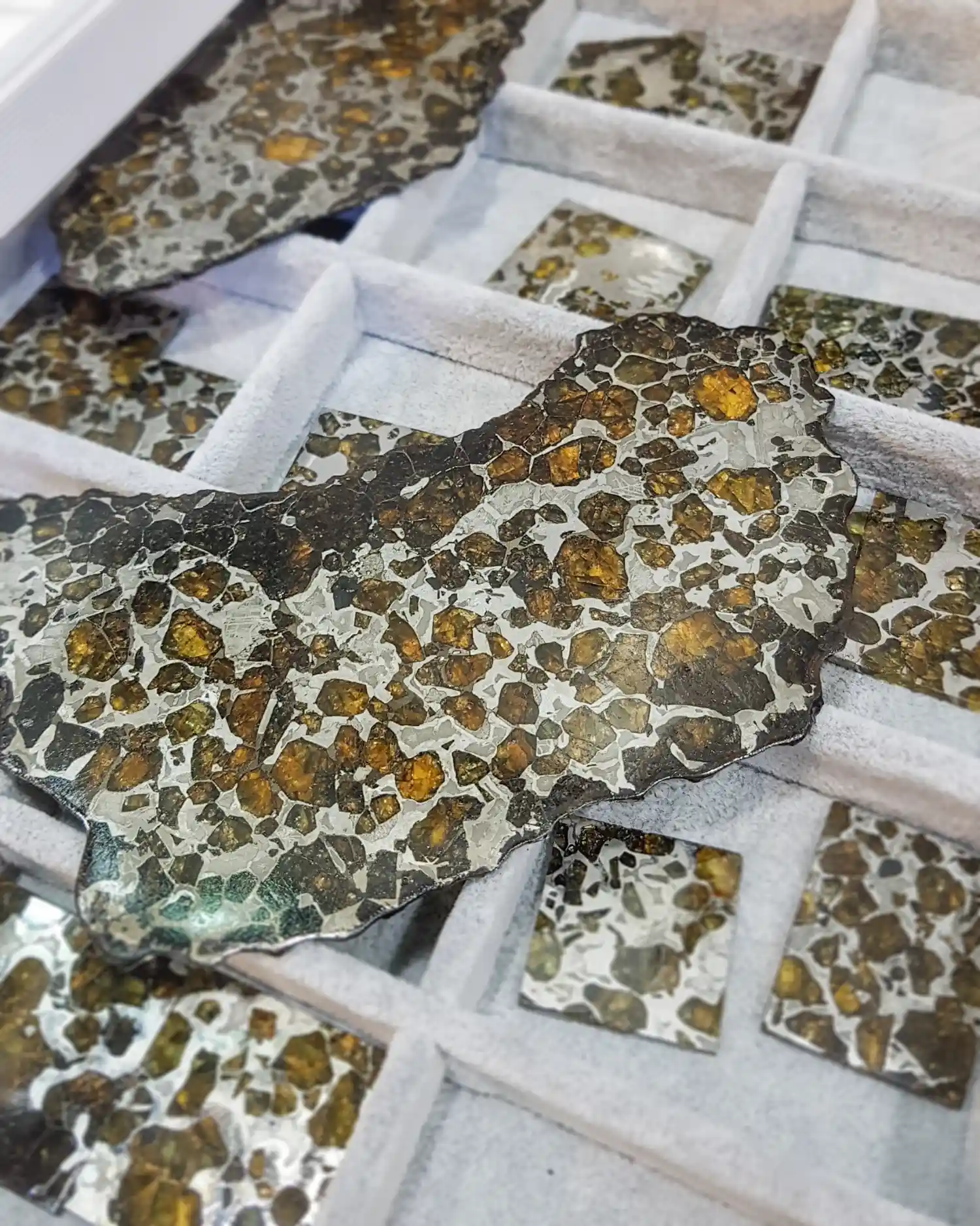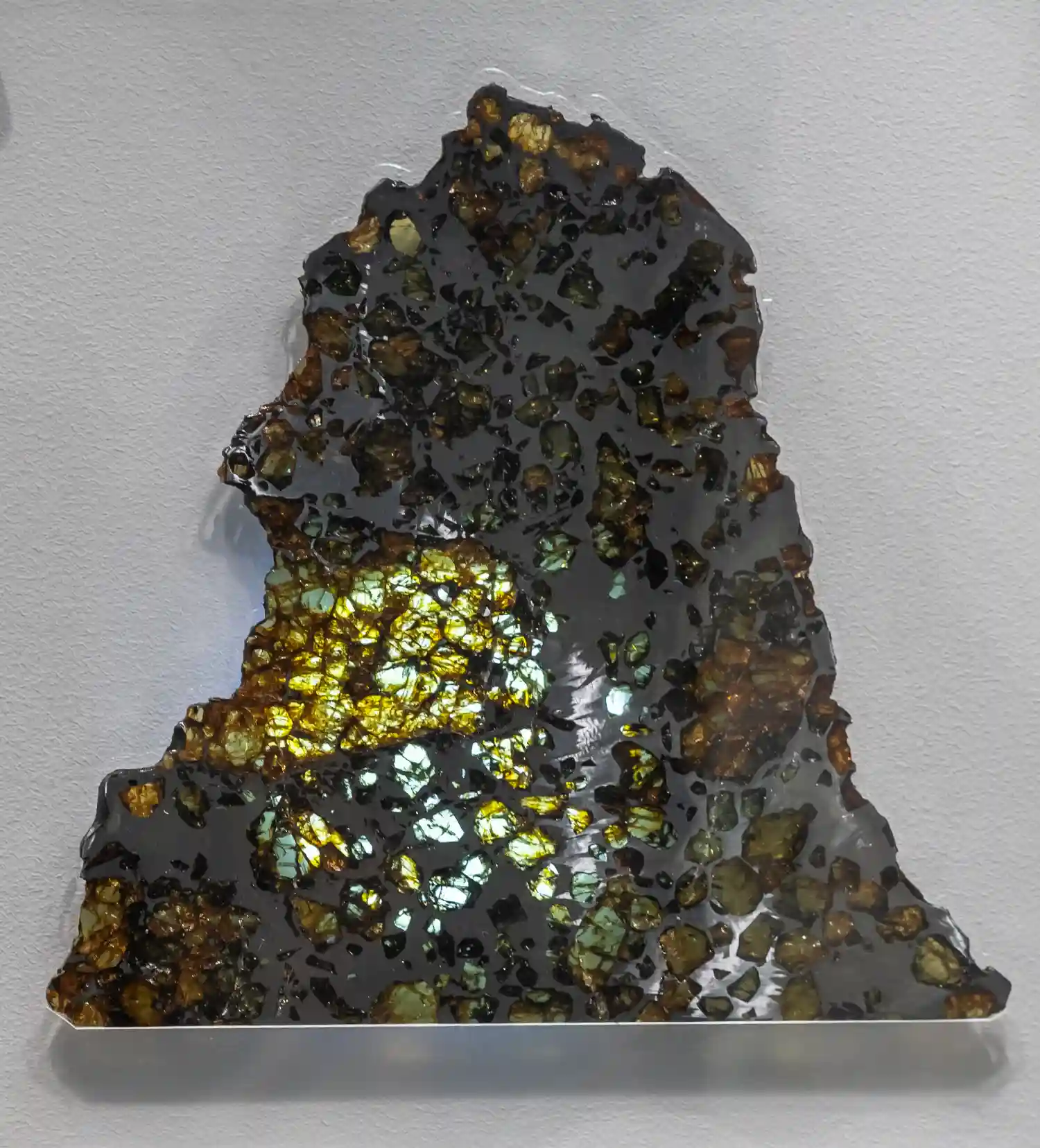
When customers look for unique gemstone jewelry, they usually expect stones mined deep within the Earth. But what if your jewelry actually came from space? Enter pallasite, one of the most visually stunning and fascinating materials used in jewelry today.
Knowing exactly what pallasite is, and how to spot a fake, is important before you buy. Whether you are looking for a simple pendant or a collector's slab, understanding the origins of this extraterrestrial stone makes sure you can buy a real, genuine pallasite.
What is Pallasite?
Pallasites are a rare type of stony-iron meteorite. Scientists believe they were formed 4.5 billion years ago at the core-mantle boundary of ancient, shattered asteroids. When you hold a piece of pallasite, you are essentially holding a piece of asteroid that survived a fiery entry through Earth's atmosphere.
Because of the very specific cosmic conditions required to create them, pallasites are rare. Out of all the documented meteorites that have fallen to Earth, pallasites make up less than 1%.
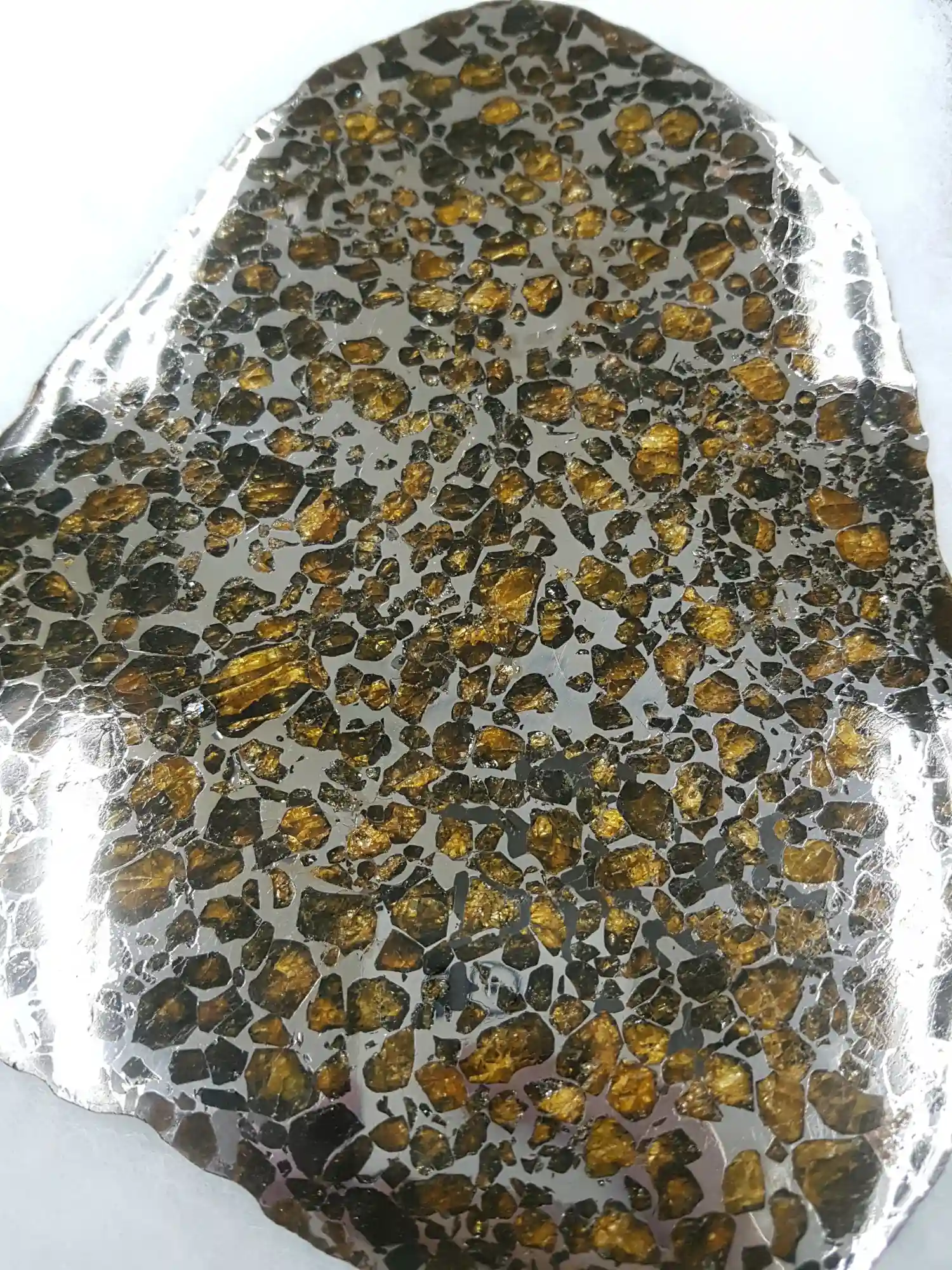
The "Extraterrestrial Peridot"
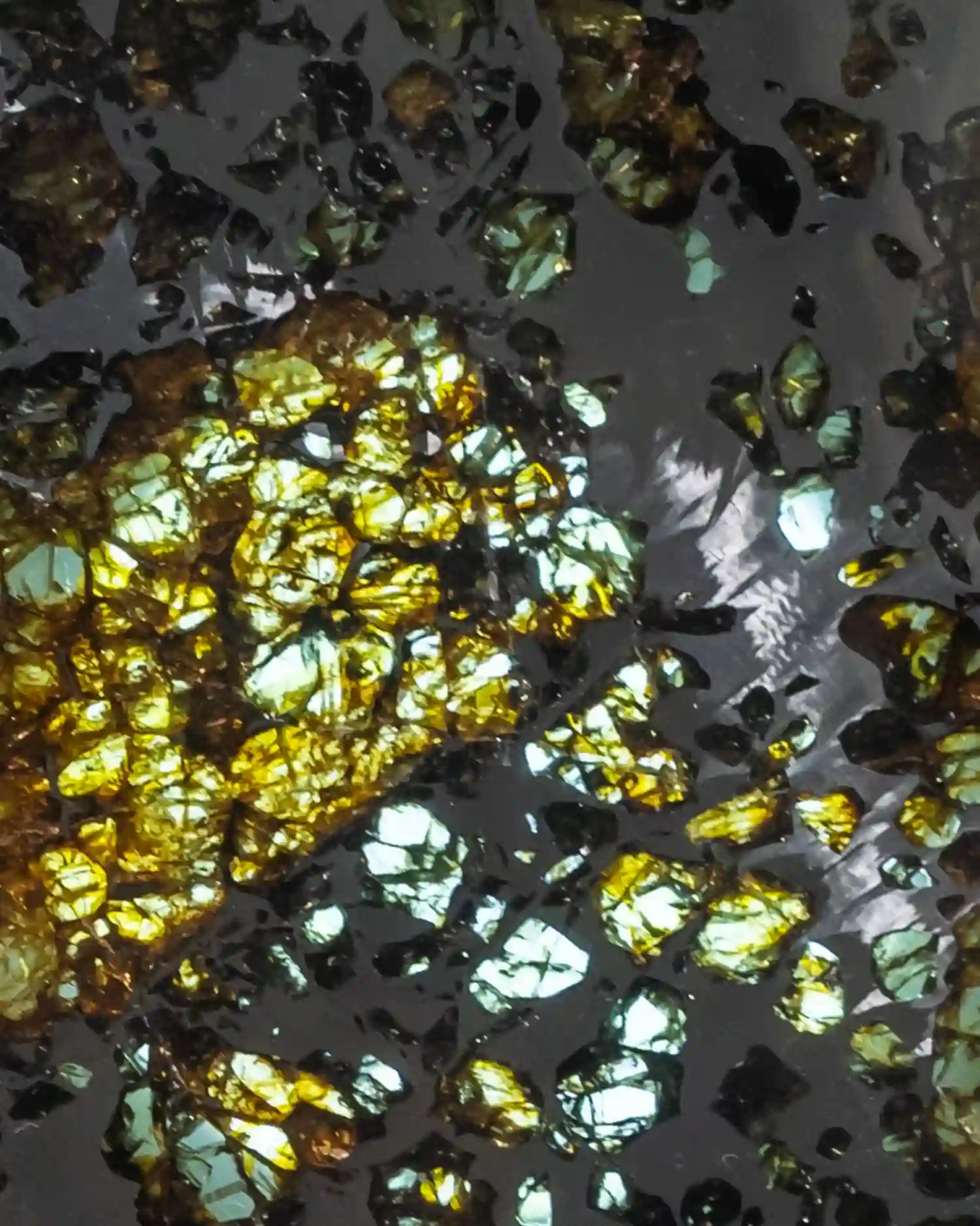
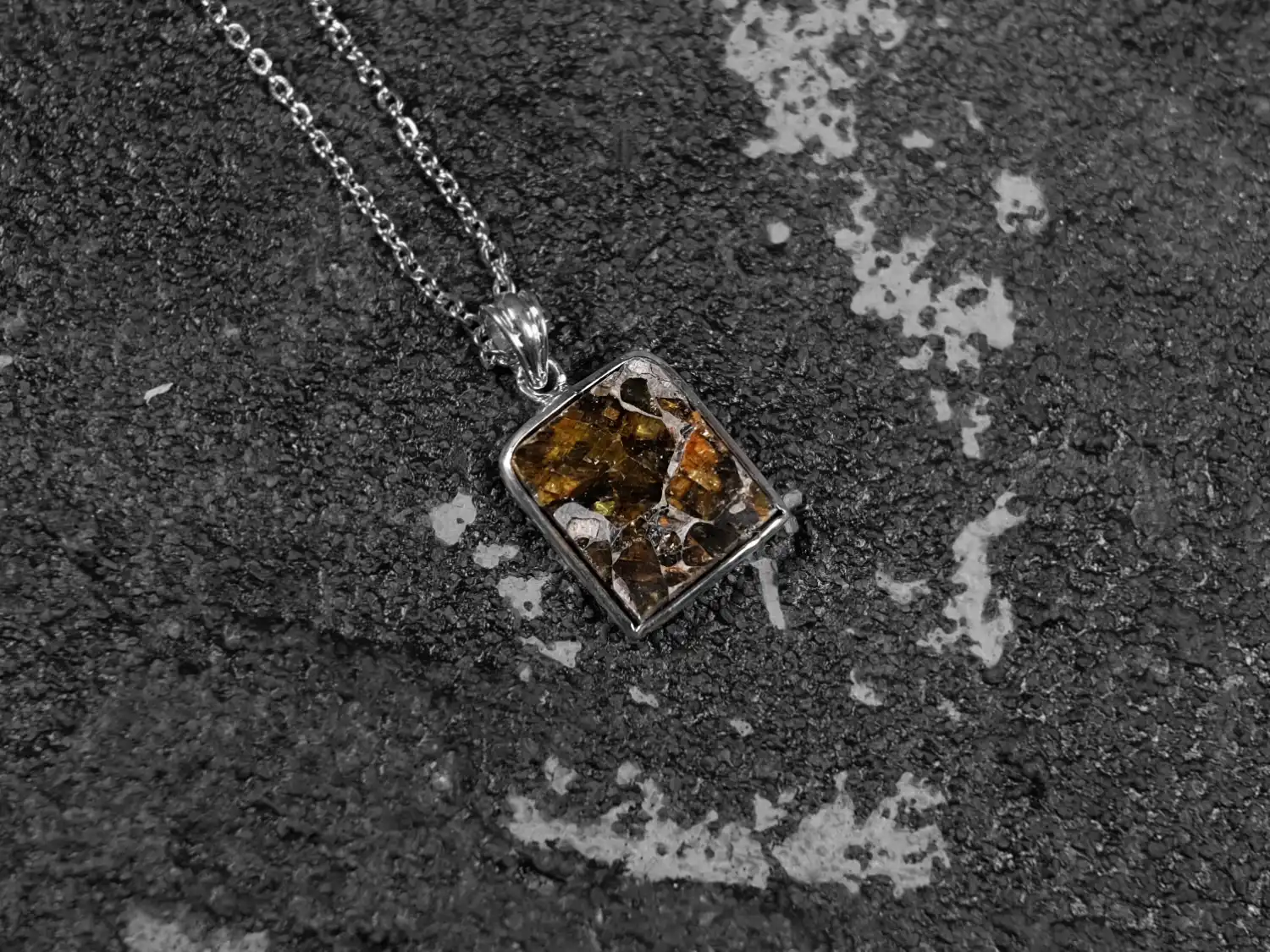
If you look closely at a slice of pallasite, you'll see a solid metallic matrix filled with translucent, yellow-green crystals. Those crystals are actually a mineral called olivine.
If that name sounds familiar to jewelry lovers, it’s because gem-quality olivine found on Earth is better known as peridot - the green traditional birthstone for August. Wearing pallasite jewelry means you are literally wearing peridot that comes from space. It is chemically and structurally the exact same crystal as the gems mined on Earth, but with an origin story that is out of this world.
Famous Pallasite Falls
Meteorites are traditionally named after the location where they landed or were discovered. When sourcing pallasite, you will often hear specific names used by dealers and collectors.
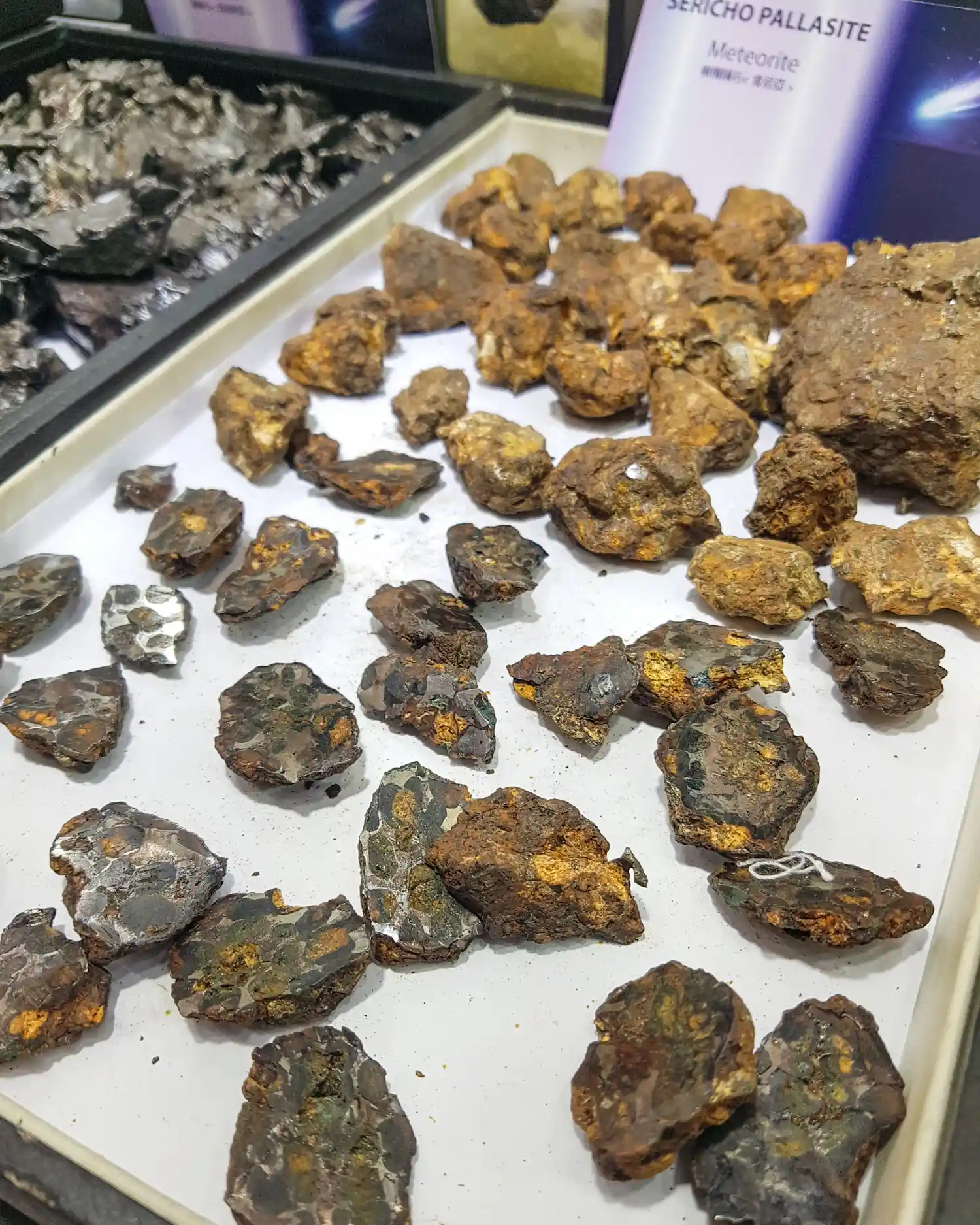
For example, Sericho is a beautiful pallasite discovered in Kenya in 2016 by camel herders. Other famous falls include Seymchan from Russia, known for a stable metal matrix that makes it great for jewelry, and Esquel from Argentina, famous for its large, highly translucent yellow-green crystals. Collectors often value knowing exactly which meteorite their stone came from.
Fakes & Imitations of Pallasite
Because genuine pallasite is incredibly rare and somehow difficult for gem cutters to work with, fakes are unfortunately often seen on the market. If you are shopping for a piece of pallasite jewelry, there are a few key things to look out for.
The most common fake involves taking crushed chips of cheap terrestrial peridot and setting them into a metallic-coloured resin or epoxy. Look closely at where the crystal meets the metal. In real pallasite, the bond is natural and irregular. If the "metal" looks like dull plastic or glue holding stones together, it’s likely a fake.
Weight is another giveaway. Meteorite iron is very dense. A genuine piece of pallasite will feel surprisingly heavy for its size, while fakes made with aluminum or resin will not feel as heavy.
Finally, look at the crystals themselves. Genuine pallasite went through a violent journey to get to Earth. The crystals often feature tiny, natural stress fractures or cloudy spots. Also, don't expect the peridot crystals in pallasite to be as green as top quality peridot; Usually they are more of a yellow-green colour. As with all gemstones, if a piece of pallasite looks incredibly perfect, totally clear, and the price is unusually low, it is likely coloured glass or a synthetic fake.