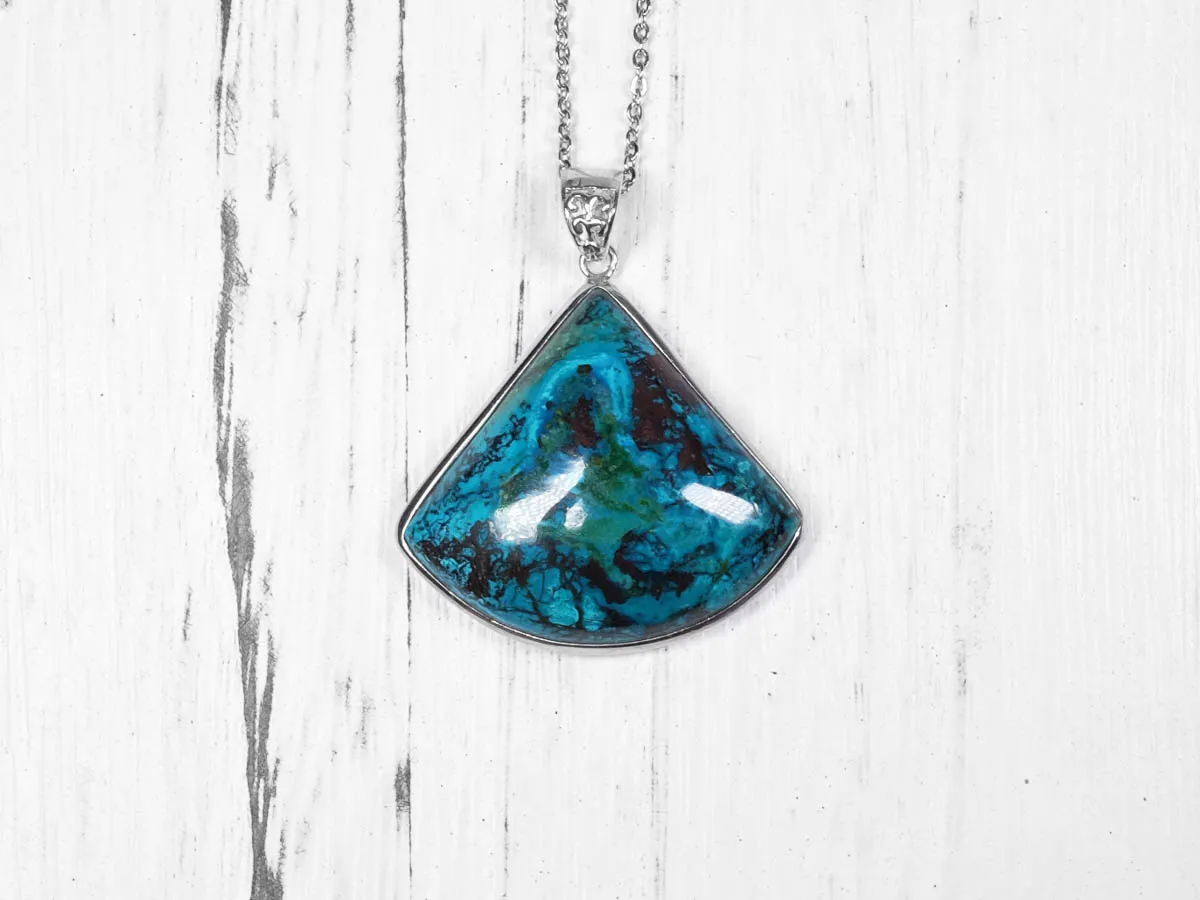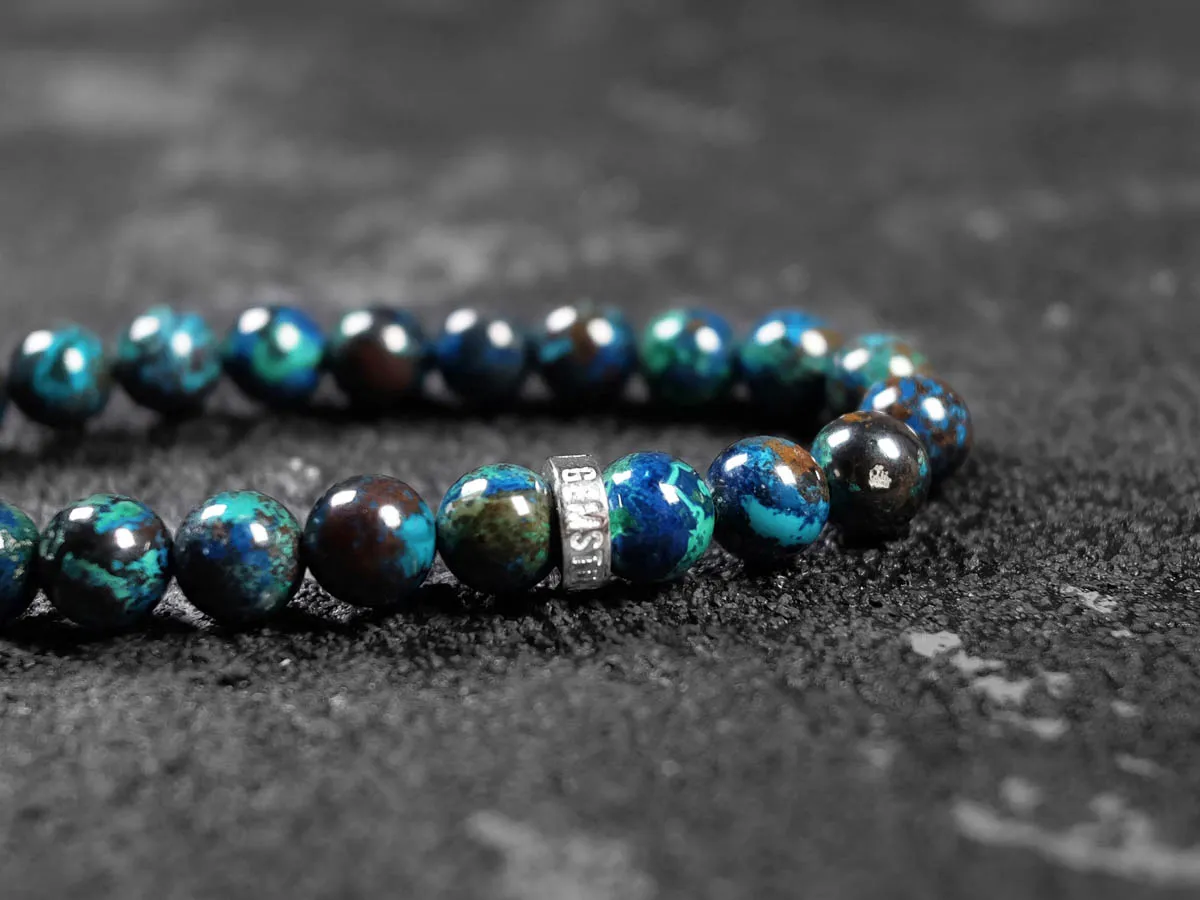
Shattuckite Jewelry
A vivid blue copper mineral, first found at the Shattuck mine in Arizona
Unearthed Gemstones Shattuckite Jewelry
Click the photos for a closer look of the jewelry pieces
Hardness
3.5 (Soft): Handle with care; Easily scratchable.
Toughness
Poor (Fragile — Can chip or break easily; Treat gently and store separately)
Mineral Family
Shattuckite (Copper Silicate)
Transparency
Opaque
Crystal System
Orthorhombic
Lustre
Silky
What Is Shattuckite?
Shattuckite is a copper silicate in intense, saturated blue, from bright cornflower to deep navy, often swirled with the greens of its frequent companions malachite and chrysocolla. It was first described in 1915 at the Shattuck mine in Bisbee, Arizona, which gave it its name. Today the best gem material comes from Namibia and the Democratic Republic of the Congo. It typically forms in fibrous, spherical sprays, and polished stones can show a subtle silky shimmer across that electric blue.
Is Shattuckite Durable Enough for Everyday Jewelry?
Shattuckite is soft, around 3.5 on the Mohs scale, so it is a stone for pendants, earrings and careful beadwork rather than rings. Much jewellery material is naturally intergrown with quartz, which toughens it up considerably, and that is worth asking about when you buy. It is cut as cabochons and beads.
How to Care for Shattuckite Jewelry
Keep it away from acids, ultrasonic cleaners and rough contact, and wipe it clean with a soft, damp cloth.
Is Shattuckite's Colour Natural?
Its colour is so vivid that people assume dye, but the real thing truly is that blue.
Gemstones Similar to Shattuckite
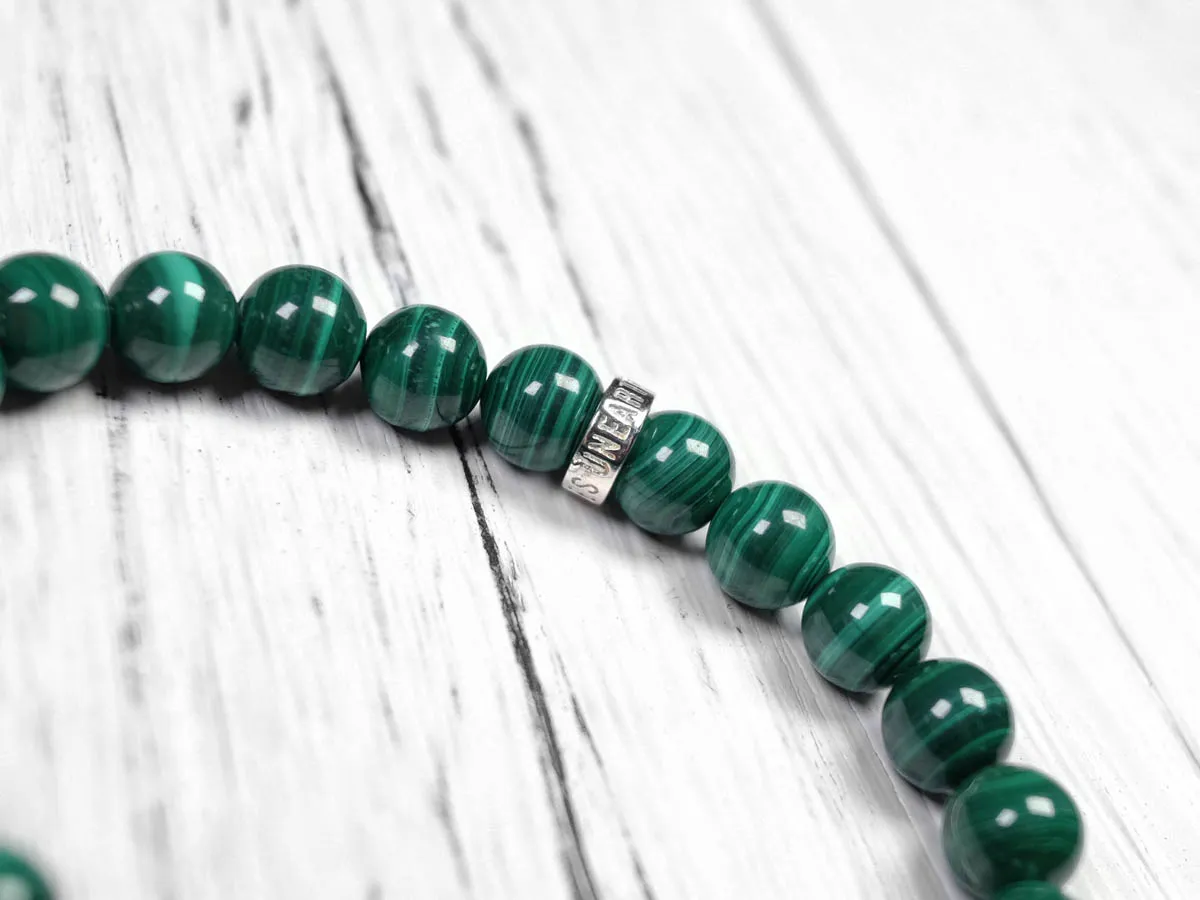
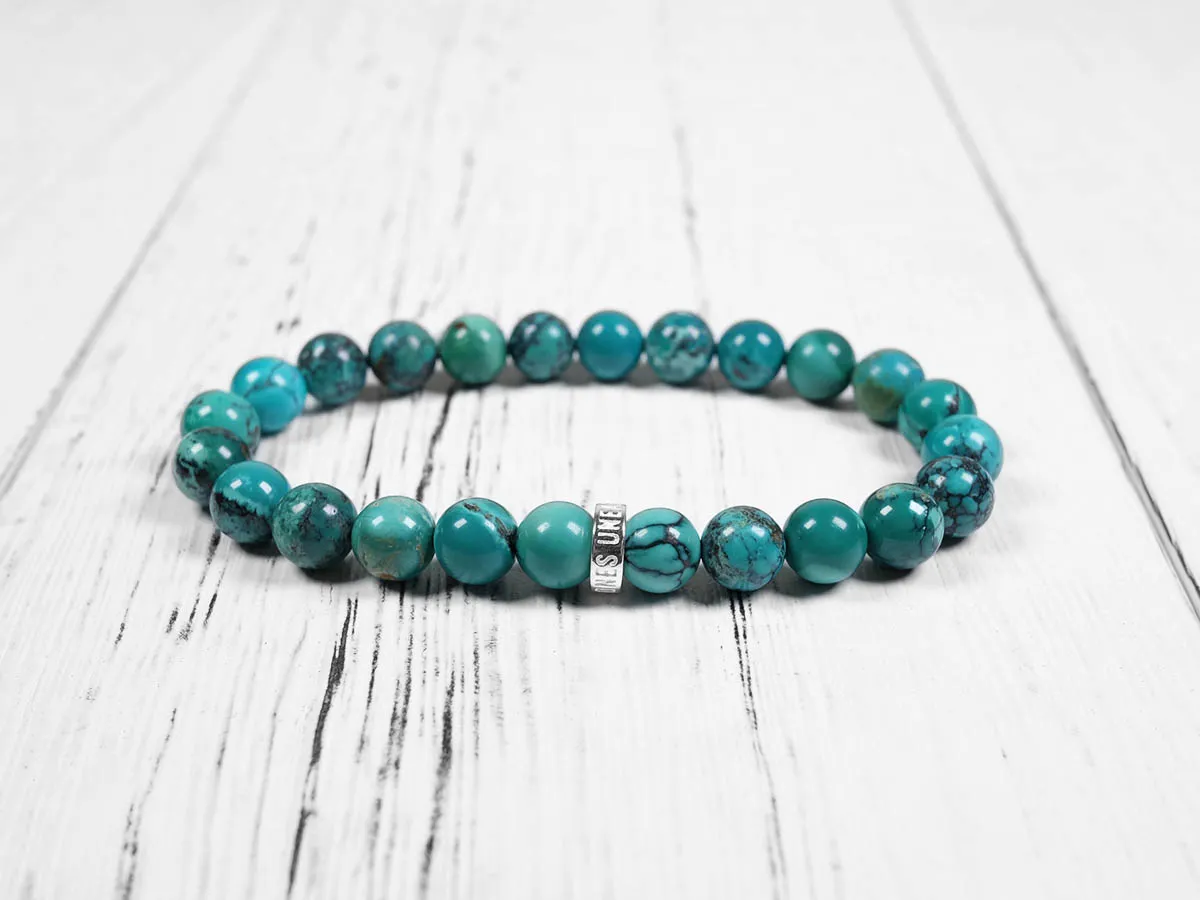
Copper-rich gemstones: it often grows in the very same rock as chrysocolla and malachite.