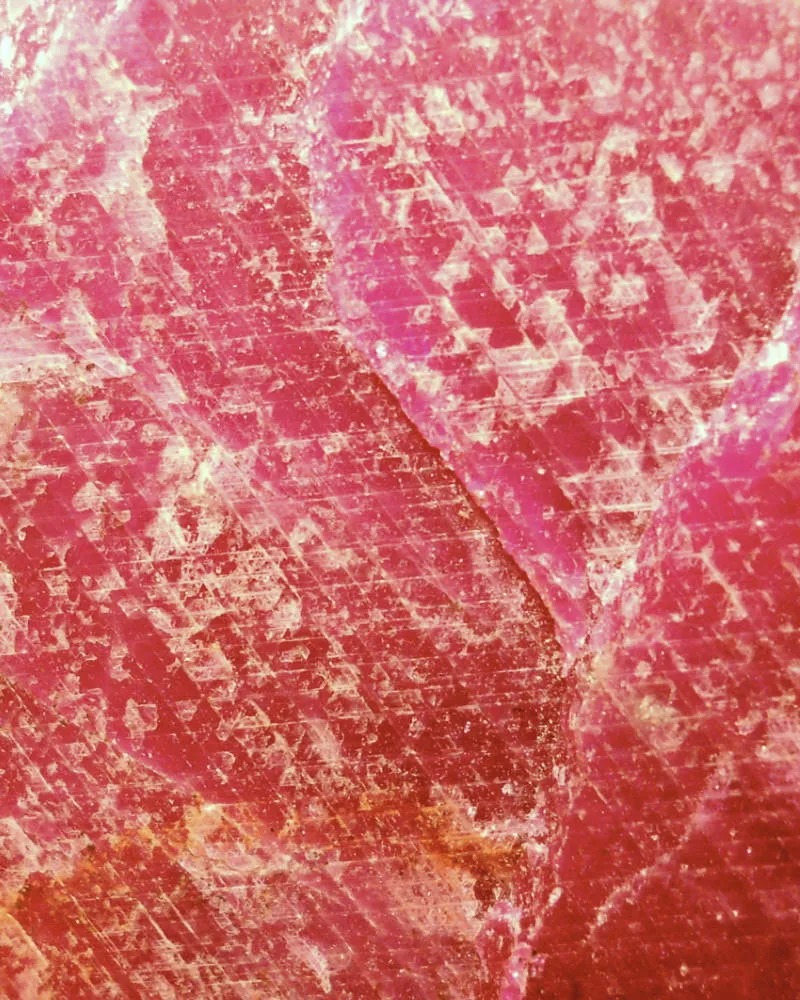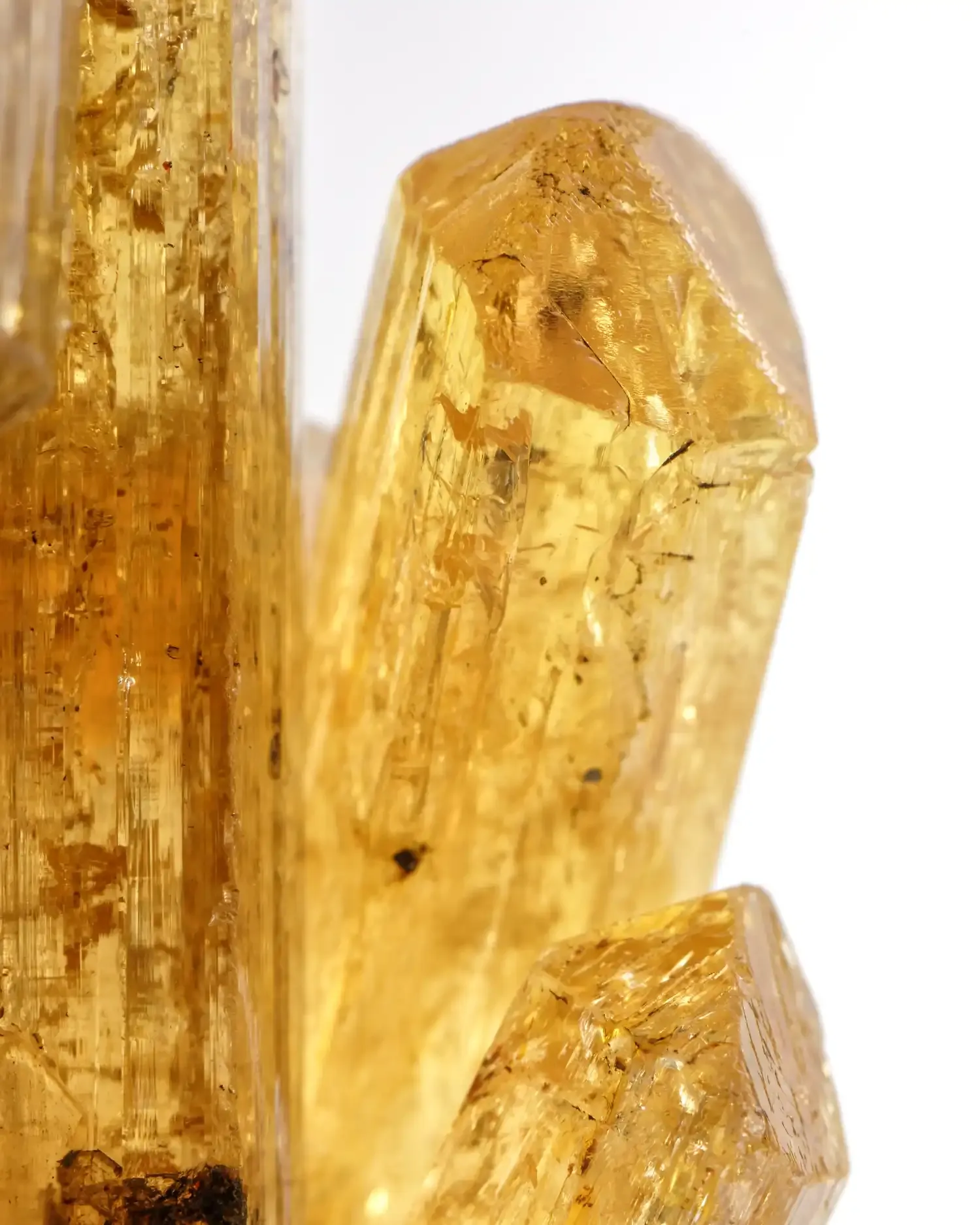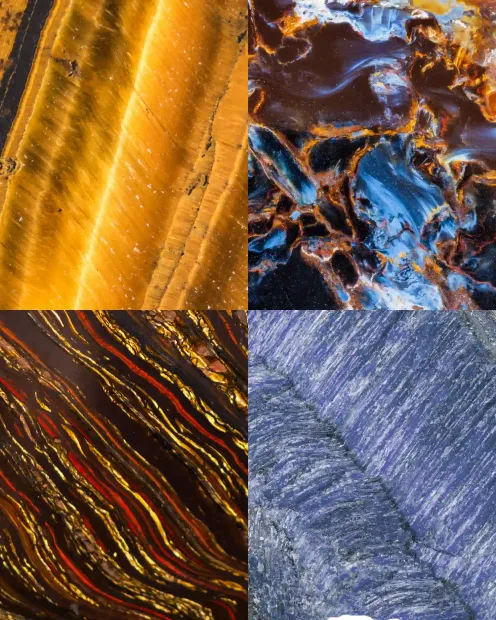
Tiger's eye, hawk's eye, tiger iron, pietersite. Four different names, four different looks, and (here's the fun part) one shared origin story.
If you've ever wondered how these stones relate to each other, or whether that suspiciously bright "tiger's eye" bracelet is real, this is the guide for you.
In this article, I will guide you through the family origin story, the light effect that makes all four stones magical, what they cost, the treatments to know about, and why spotting fakes in this family is pretty easy.
One Origin Story, Four Stones
It all starts with crocidolite, a blue, fibrous mineral (a form of the amphibole riebeckite). Long ago, in places like South Africa's Northern Cape, quartz slowly grew through and around bundles of these fine parallel fibres, locking that fibrous structure inside hard, polishable stone.
What happened next decides which family member you get:
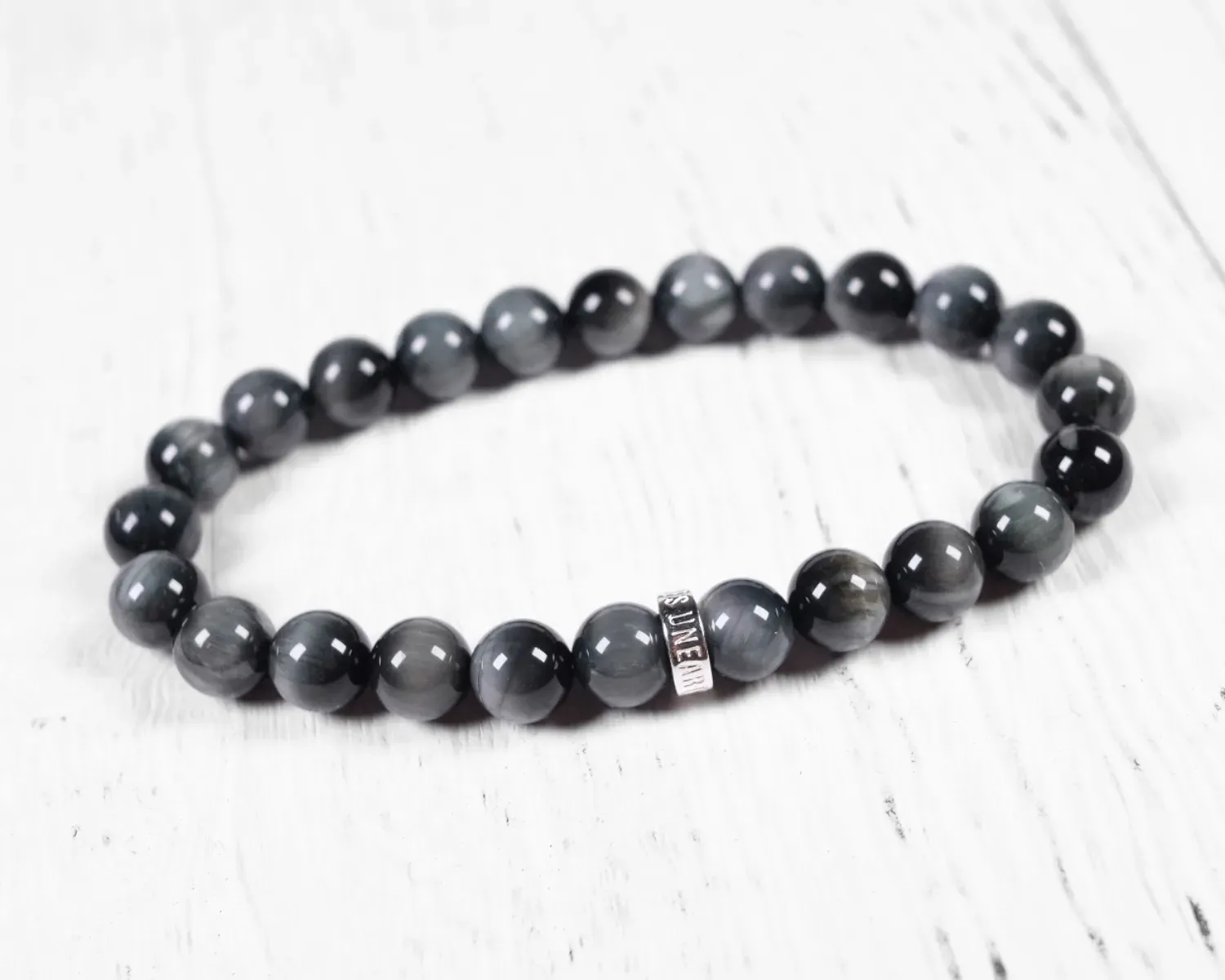
Hawk's eye. The quartz sealed the fibres while they kept their original steely blue-grey colour. Hawk's eye is the family's starting point.
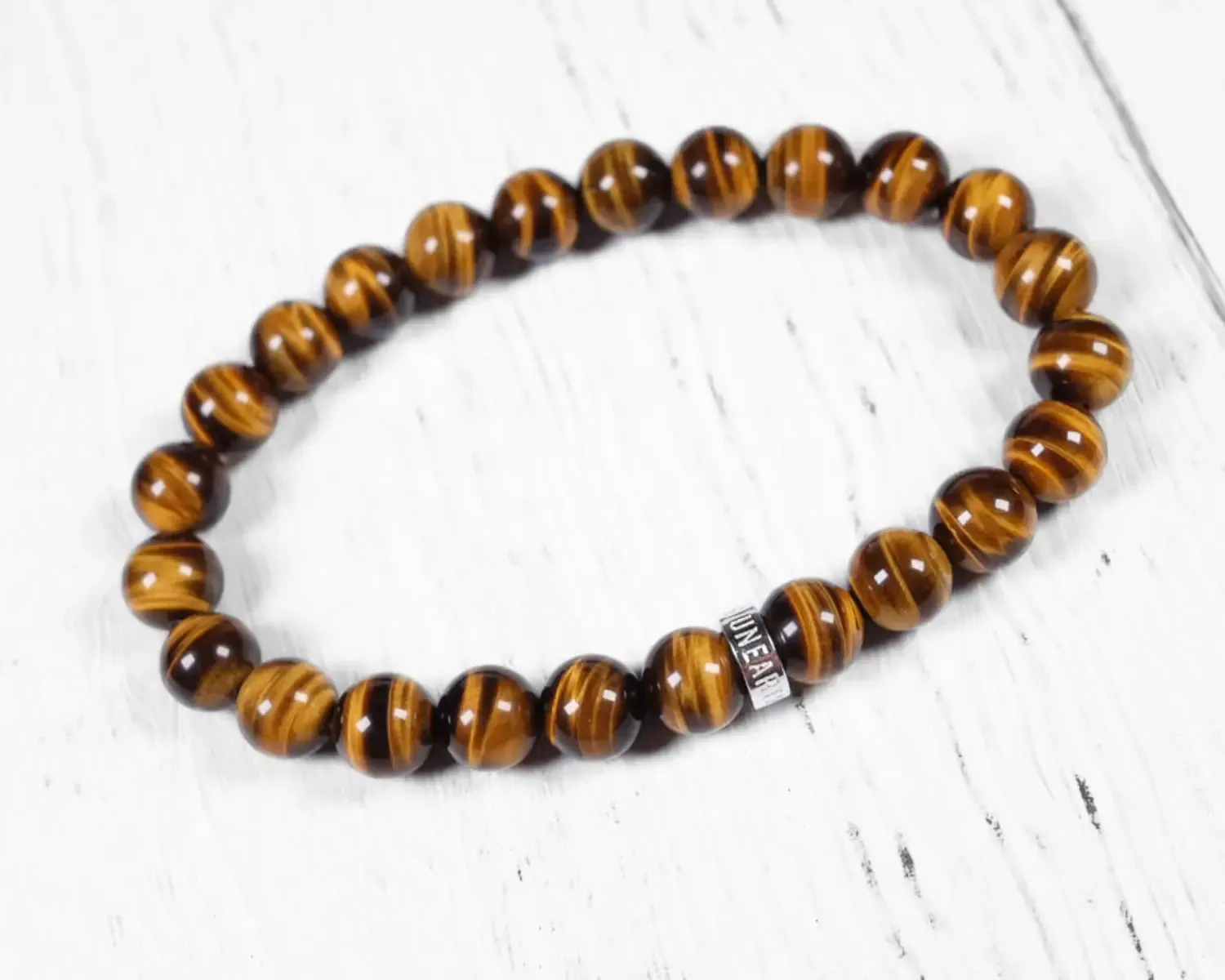
Tiger's eye. Iron from the crocidolite oxidised (essentially, rusted) during the process, staining the fibres warm golden brown. Same structure, new wardrobe.
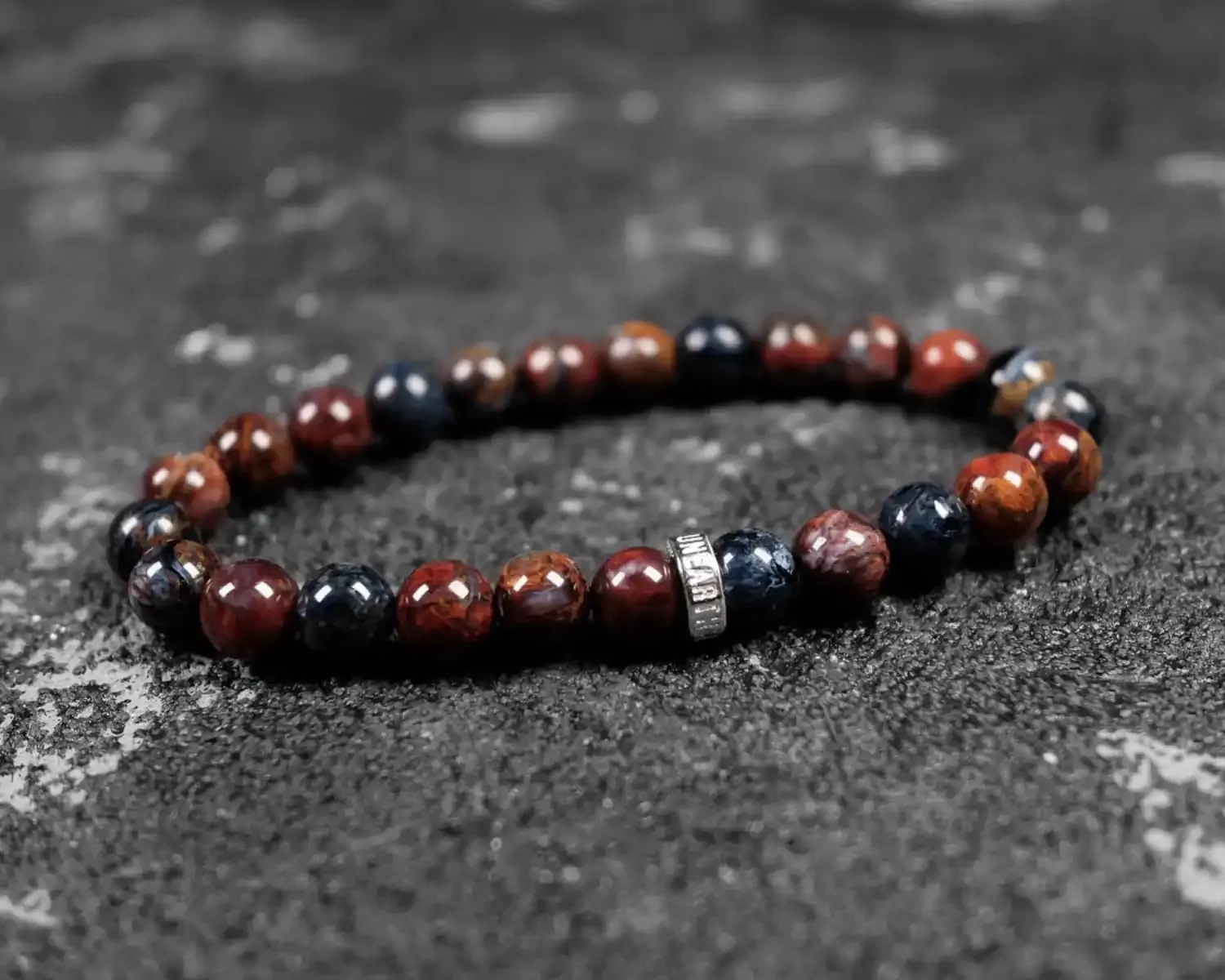
Pietersite. Earth movements shattered the fibrous material into fragments, which were then naturally re-cemented by quartz (a process called brecciation). The result swirls blue, gold and rust together in storm-cloud patterns. It was discovered in Namibia in 1962 by Sid Pieters.
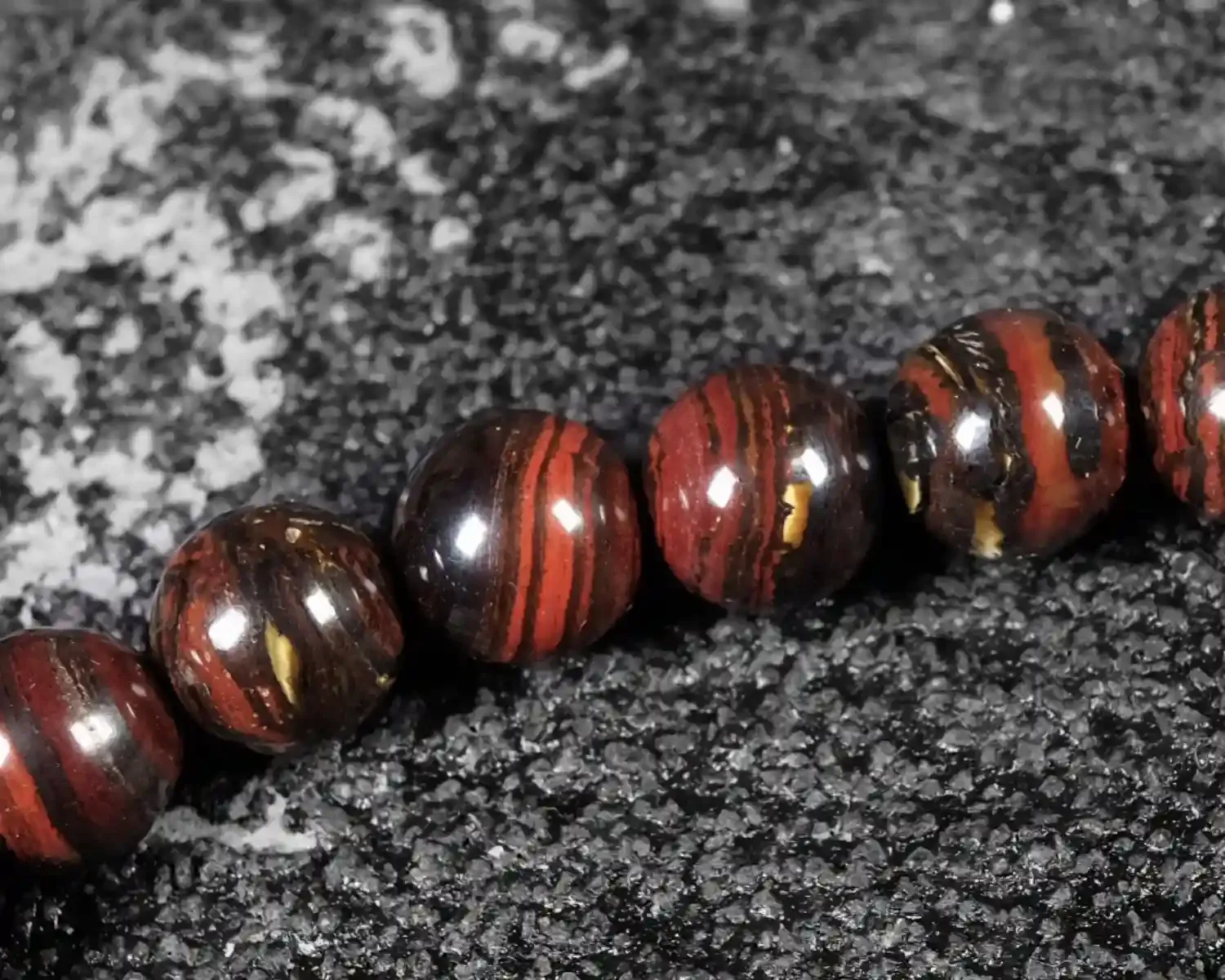
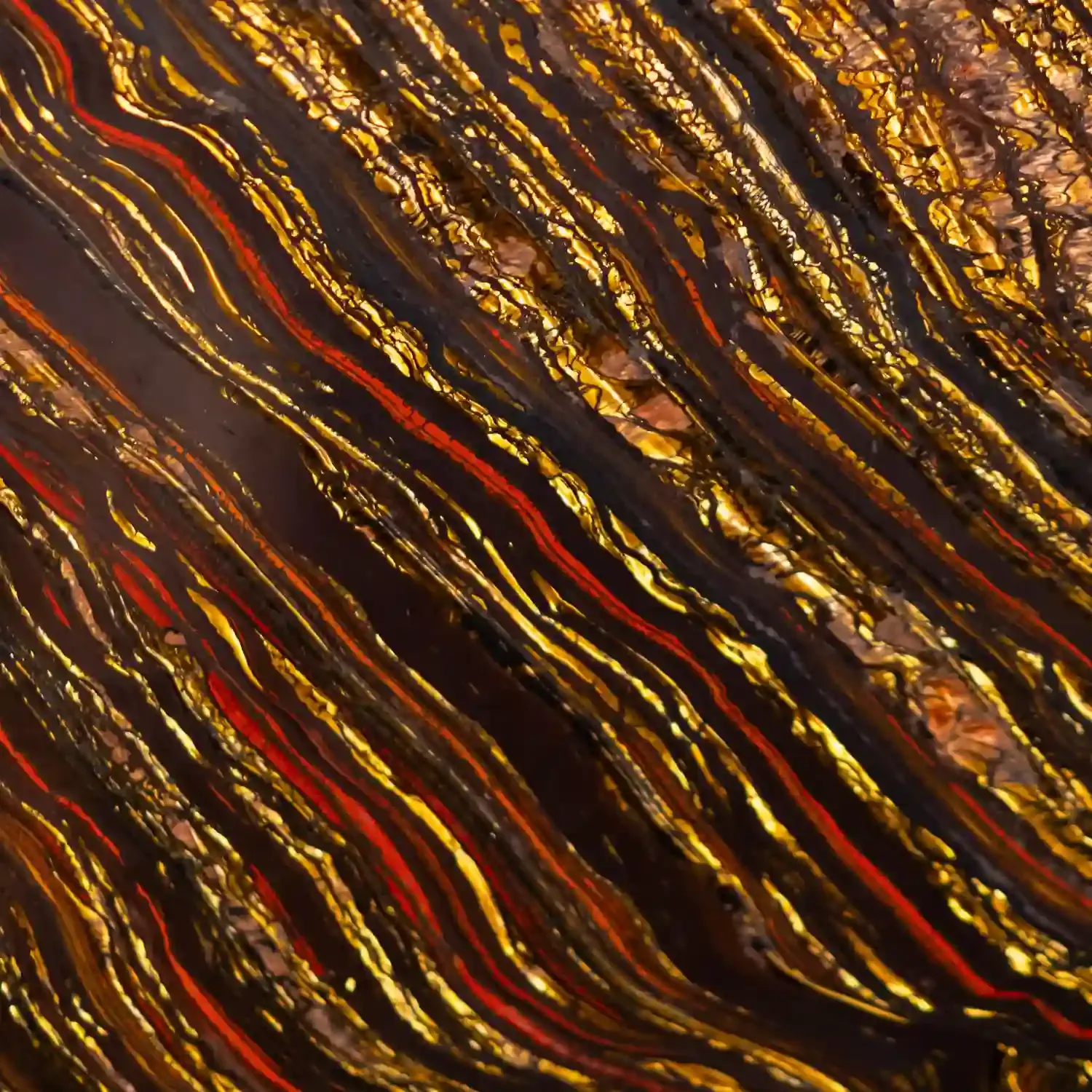
Tiger iron. Here the tiger's eye formed in layers alongside metallic hematite and red jasper, in banded iron formations over two billion years old. It's a striped rock containing tiger's eye, rather than a variety of it.
The Chatoyancy: Why These Stones Seem Alive
All four stones share one signature optical effect: chatoyancy, from the French for cat's eye. Light reflects off those thousands of parallel fibres and concentrates into a bright band that sweeps across the stone as you tilt it, exactly like the slit of a cat's eye moving.
Each stone plays the effect differently. Tiger's eye rolls a golden band across warm brown. Hawk's eye sweeps a cooler, silvery-blue sheen. Pietersite, with its fibres jumbled in every direction, flashes from multiple angles at once, which is why it's nicknamed the tempest stone. Tiger iron alternates chatoyant golden stripes with mirror-like hematite and matte red jasper bands.
This is also why photos never quite do these stones justice: chatoyancy's effect is visible only when in motion, and it's hard to show that in photos.
Cutting, Cost and Wear
Cutting is everything. To make the band of light appear, the cutter must orient the dome of a cabochon parallel to the fibres. Cut it wrong, and the effect simply vanishes. This is why these stones are almost always cabochons and beads, never faceted: flat facets would scatter the magic.
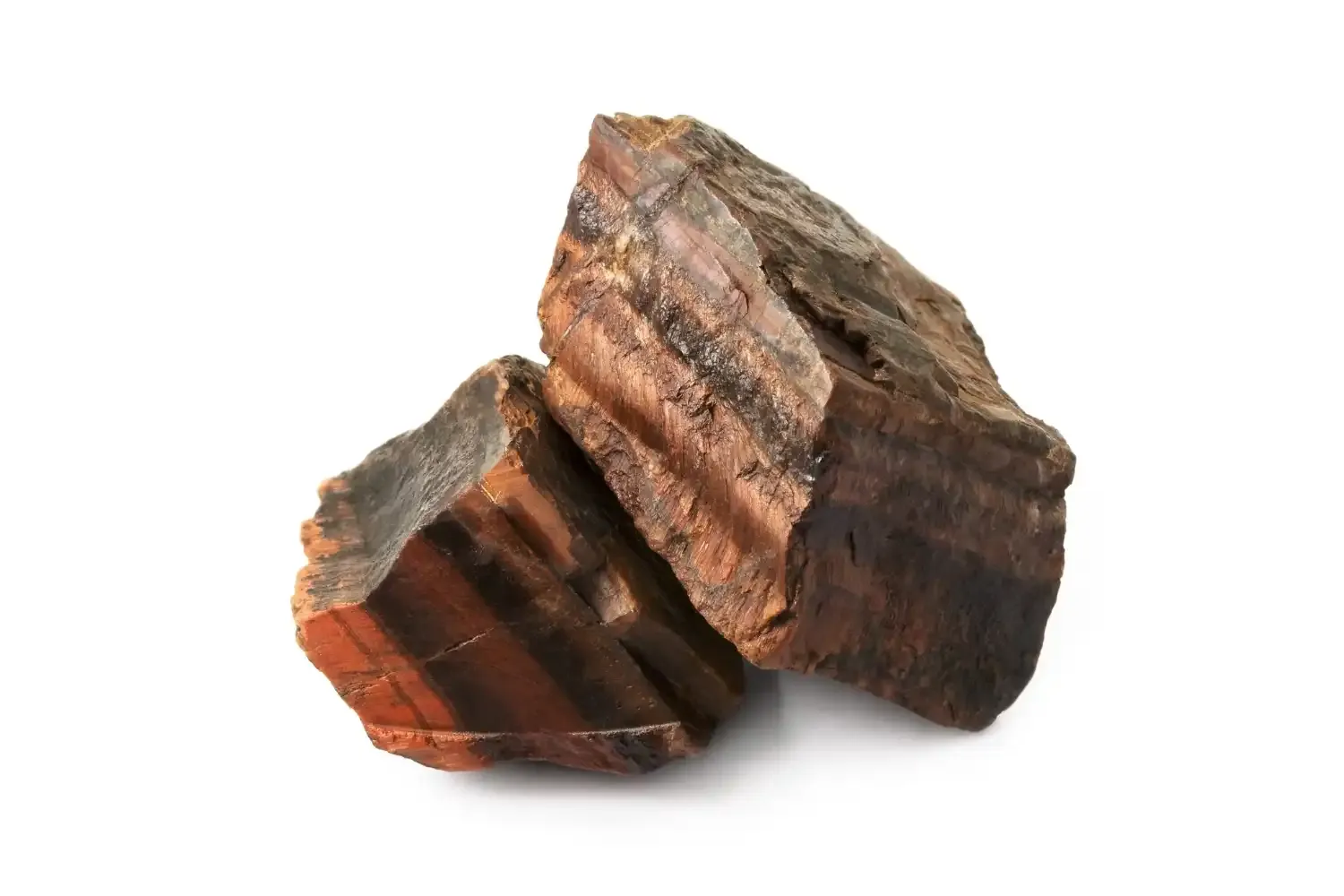
Costs are friendly, with one exception. Tiger's eye and tiger iron are abundant and affordable, which makes them some of the best value chatoyant stones in the world. Hawk's eye costs a little more, since less material survived unstained. Pietersite is the family's rare one, found only in Namibia and China's Hunan province, and its price reflects that.
Wearability is excellent across the board. All four sit around 6.5 to 7 on the Mohs scale with tough, fibrous structures. Daily rings, bracelets and pendants are all fair game, and care is nothing more than warm, soapy water. One tiger iron note: the hematite layers make it surprisingly heavy for its size, which is actually a lovely authenticity clue in itself.
Common Treatments to Know
Two treatments show up in this family, and both are worth understanding before you buy:
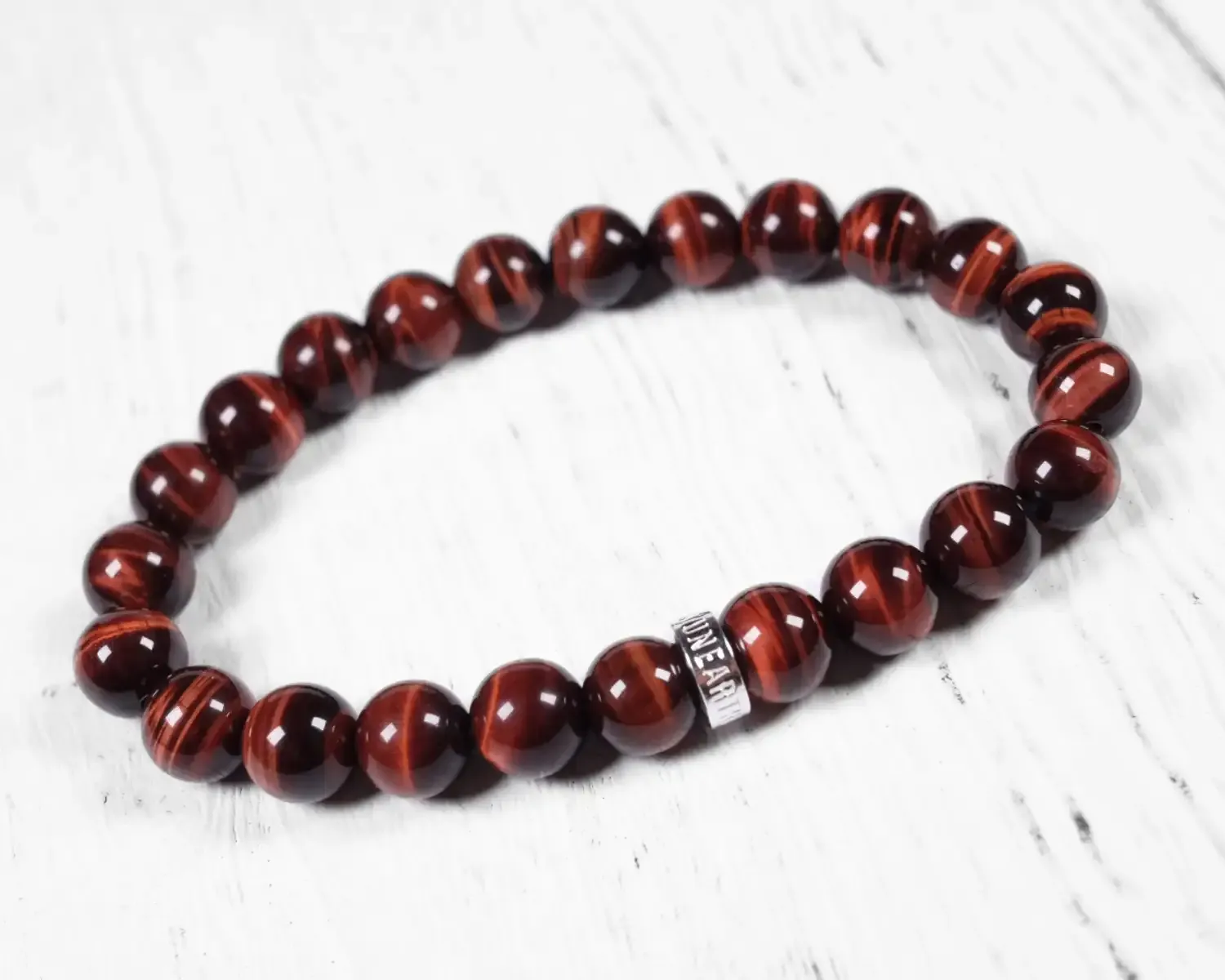
Heated red tiger's eye. Gently heating golden tiger's eye oxidises the iron further and turns it a rich mahogany red. Red tiger's eye is genuine tiger's eye, but the colour is created by heat, and reputable sellers will mention that.
Dyed tiger's eye. Tiger's eye takes dye well, and dyed material appears in every colour imaginable, including some very vibrant blues. This matters because loud blue dyed tiger's eye is sometimes sold as "blue tiger's eye", inviting confusion with natural hawk's eye. The tell: natural hawk's eye is a moody, steely grey-blue. If the blue looks electric, saturated and bright, you're looking at dye. Dyed stone isn't fake, but it should never be priced or labelled as the natural article.
Spotting Fakes Is Easy (Really)
Here's the good news: this family is one of the easiest in the gem world to verify, because the natural material is so affordable that faking it barely pays. When imitations do appear, they are very easy to spot.
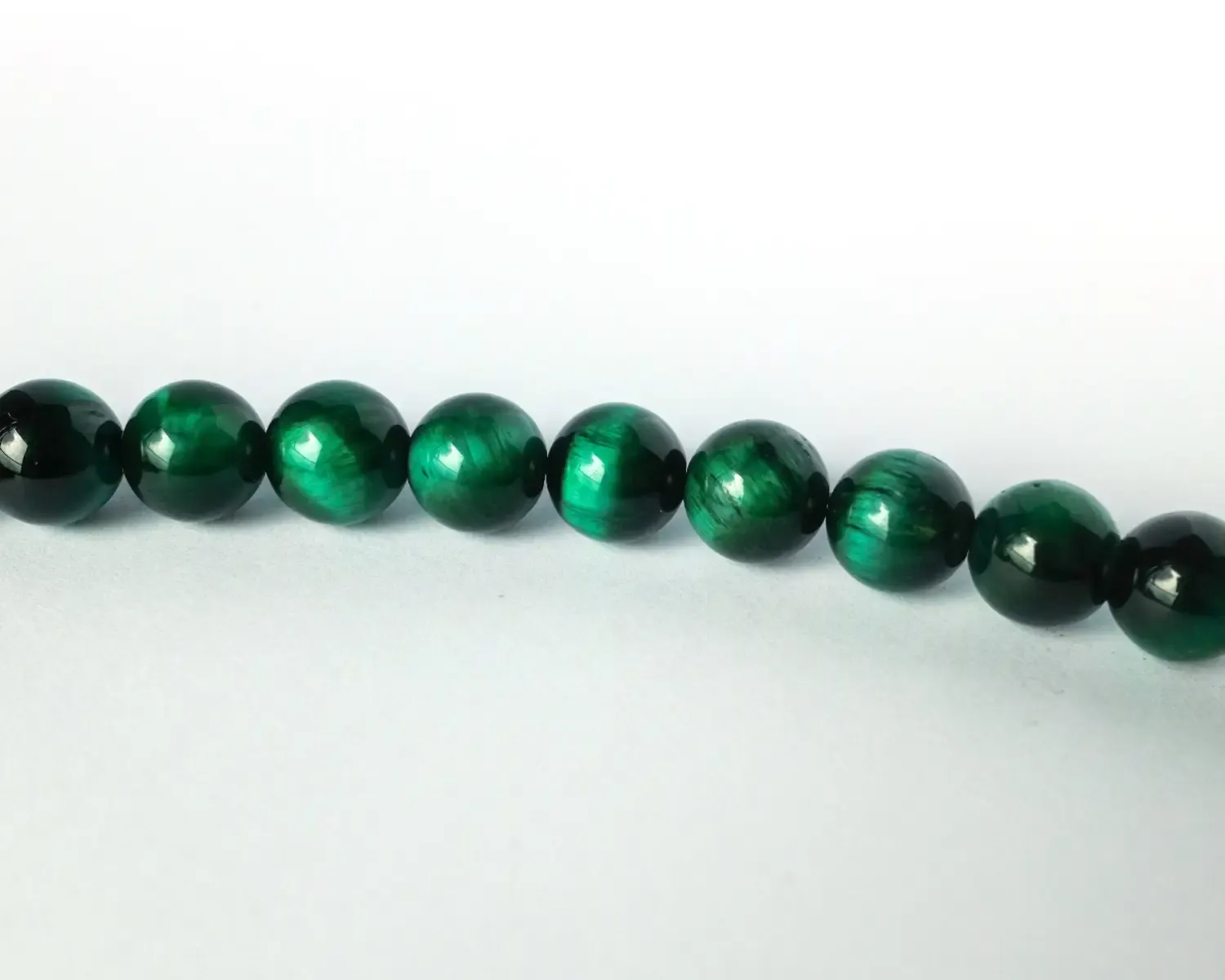
Fibre-optic glass is the main impostor: man-made glass with embedded parallel fibres, sold as "cat's eye". It looks almost cartoonishly perfect. The colours are lolly-bright (hot pink, neon green, electric blue), the light band is razor sharp and hyperactive, and every bead on the strand is identical. Genuine tiger's eye shows natural variation: bands of slightly different width, patches of deeper and lighter colour, fibres that wander.
Plastic occasionally appears in cheap beads, and the weight gives it away instantly. Real tiger's eye feels dense and cool; plastic feels like nothing.
In short: if it looks too perfect, too bright, and too uniform, it's likely fake.