

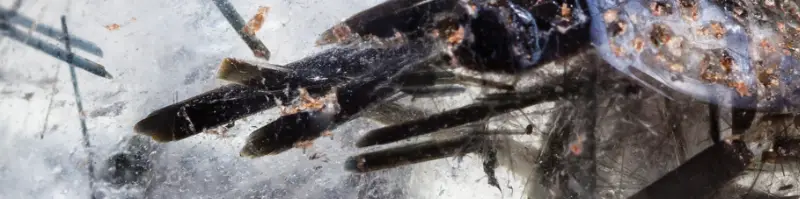


Tourmalinated quartz is clear rock crystal shot through with needles of jet-black schorl tourmaline, like ink strokes frozen in ice. The two minerals grew together, with the tourmaline crystallising first and the quartz sealing it inside. The result is high contrast and completely natural graphic drama, and because the needles grew randomly, every stone has its own composition. Brazil produces most of the world's supply, with more from Madagascar and elsewhere.
The quartz host means a hardness of 7 and no cleavage, so it wears happily every day in rings, pendants and beads, though stones crammed with needles can be slightly more prone to chipping along them. It is cut faceted, as cabochons and as freeform slices, with cutters choosing windows that show the boldest strokes. Care is easy: warm, soapy water and a soft cloth. Its black-on-clear look is distinctive enough that imitations are rare, and resin fakes feel warm and light in the hand.
Its black needles are genuine tourmaline; rutilated quartz is the same idea in gold.


