

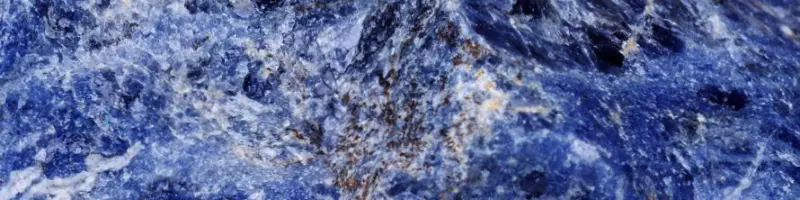


Sodalite is a sodium-rich silicate in deep royal blue, usually veined with white calcite, and its name simply reflects that sodium content. It is one of the minerals that make up lapis lazuli, which explains why the two are so often confused; the quick tell is that sodalite lacks lapis's golden pyrite sparkles. A huge deposit found in Ontario, Canada in 1891 became famous after material was chosen to decorate a royal residence, earning it the nickname princess blue. Brazil and Namibia are other major sources. Some sodalite even glows orange under UV light.
Sodalite sits at 5.5 to 6 on the Mohs scale, so it will pick up scratches in a hard-working ring but is perfectly happy in pendants, earrings and beads. It is cut as cabochons, beads and carvings that show off the blue and white marbling. Keep it away from acids and long soaks, and clean it with a quick wash in warm, soapy water. It is affordable and abundant, so there is little incentive to fake it; if anything, it is sodalite that gets passed off as pricier lapis.
Sodalite is actually one of the gemstones inside lapis lazuli; dumortierite is the harder blue look-alike.


