
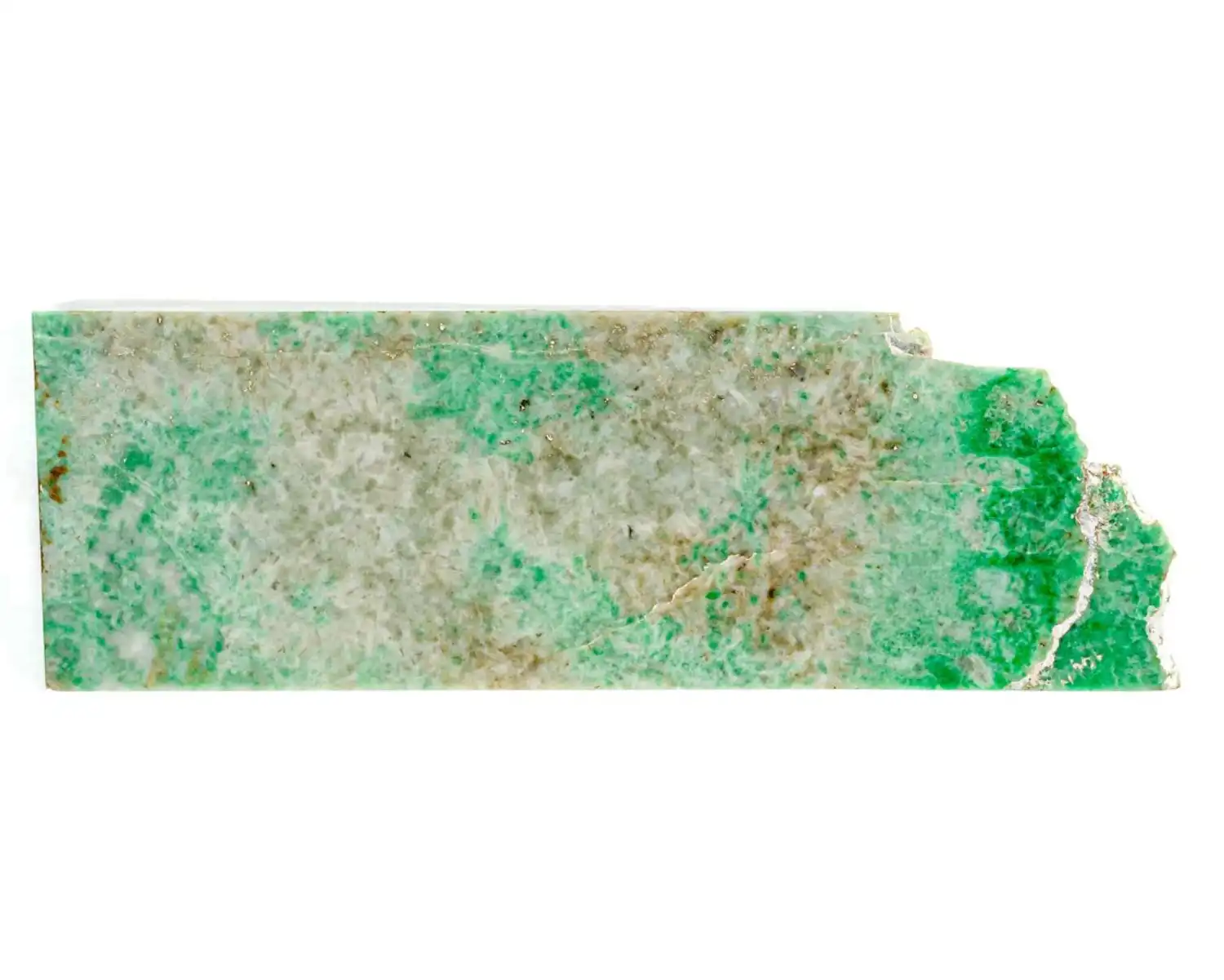
Jadeite is the rarer and more valuable of the two true jades, the other being nephrite. It is a sodium aluminium pyroxene made of tightly interlocking crystals, which gives it a dense, smooth texture and a bright, glassy polish. For centuries both stones were simply called jade, until the French mineralogist Alexis Damour showed in 1863 that they were two different minerals. Jadeite comes in green, lavender, white, yellow, red and black, and the most prized of all is imperial jade, a vivid, even emerald green coloured by chromium. Almost all gem jadeite is mined in northern Myanmar, with smaller sources in Guatemala, Japan and Russia. It reached China from Burma in the 1700s, quickly became a favourite of the Qing court, and Hong Kong remains one of the great centres of the jadeite trade today.
Yes. At 6.5 to 7 on the Mohs scale, with the interlocking structure that makes all jade so tough, jadeite handles daily wear in rings, pendants and bead bracelets. Jade bangles are traditionally worn every day for decades, though a solid bangle can still crack if it is dropped on a hard floor or knocked against stone. It is cut as cabochons, beads, bangles and carvings, and the finest translucent material is described as icy or glassy jade.
Clean natural jadeite with warm, soapy water and a soft cloth. Avoid ultrasonic cleaners, harsh chemicals and sudden heat, especially if you are not sure the stone is untreated, and store it apart from harder gems.
The jade trade grades jadeite by treatment. Type A is natural and untreated apart from a light wax. Type B has been bleached with acid and filled with resin, Type C has been dyed, and B+C is both. Only Type A holds its value: the resin in Type B can yellow and weaken the stone over time, and dyes can fade. Dyed quartzite, serpentine, green aventurine and glass are also sold as jade, so for anything costly, buy with a certificate from a recognised gem lab.
Nephrite is the other true jade, while chrysoprase and green aventurine are the most common green look-alikes.


