

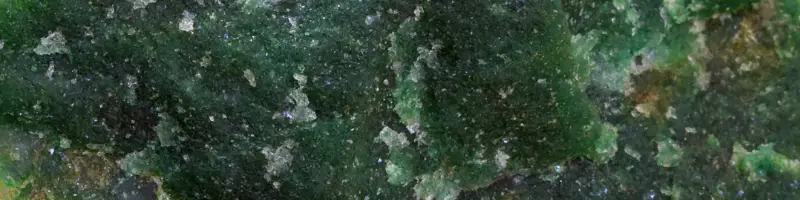


Green aventurine is a quartzite shot through with tiny plates of green fuchsite mica. Those little plates catch the light and create a soft glitter called aventurescence, which gives the stone its name. The effect was named after a type of sparkly Italian glass made by accident, a ventura, in the 1700s. The stone came later and borrowed the name. Most green aventurine comes from India, with more from Brazil and Russia. Its fresh green has made it a popular, affordable jade substitute for beads and carvings.
At 6.5 to 7 on the Mohs scale with quartz's dependable toughness, green aventurine is an easy everyday stone for rings, bracelets and pendants. It is cut as cabochons, beads and carvings, since the sparkle shows best on smooth surfaces. Care is simple: warm, soapy water and a soft cloth. When it is sold as jade, that is mislabelling rather than a different stone, so just check the name. The built-in glitter is actually a handy sign you are looking at genuine aventurine.
Chrysoprase and nephrite are its jade-green look-alikes; strawberry quartz sparkles the same way in red.


