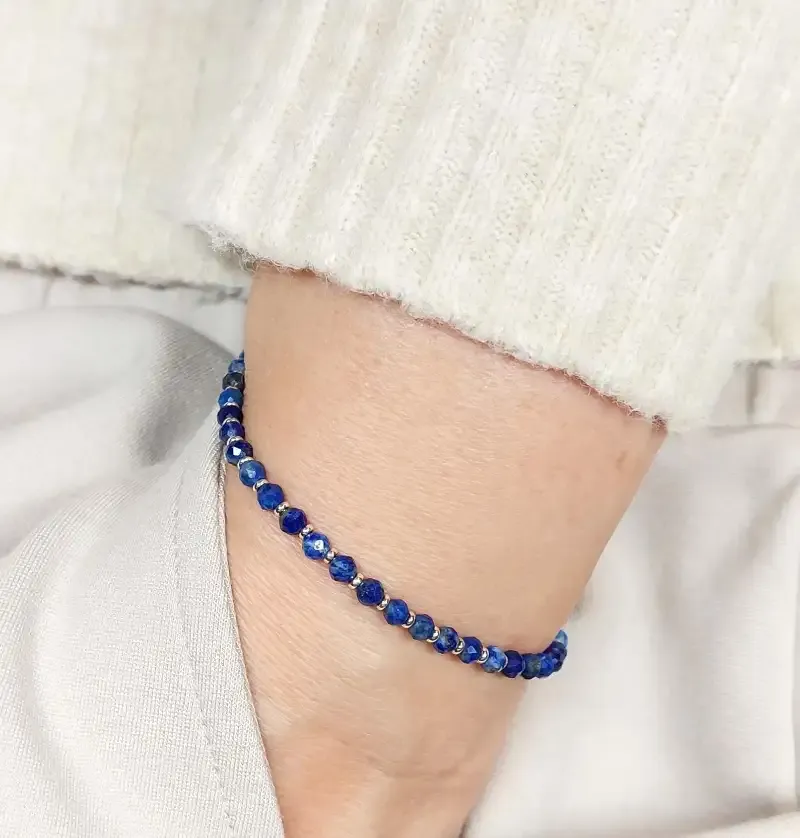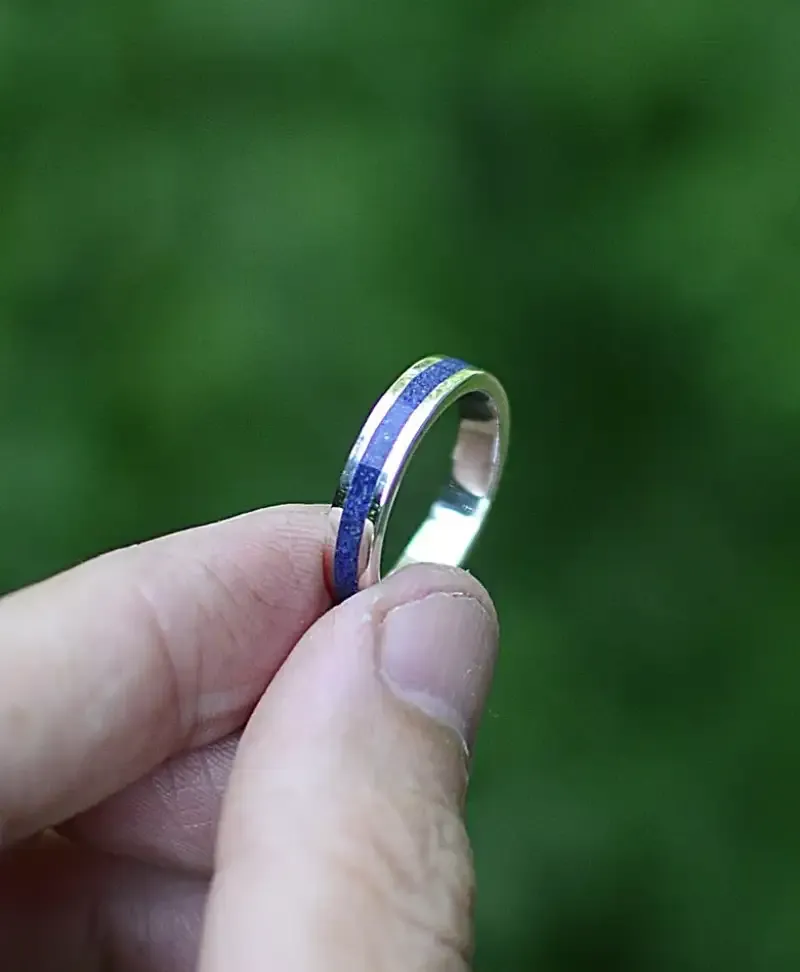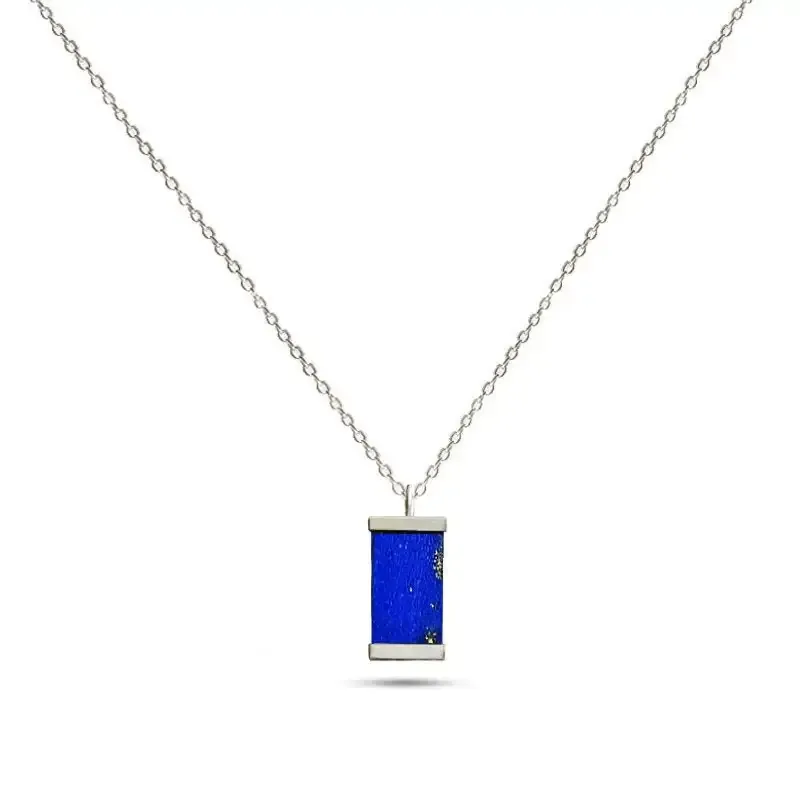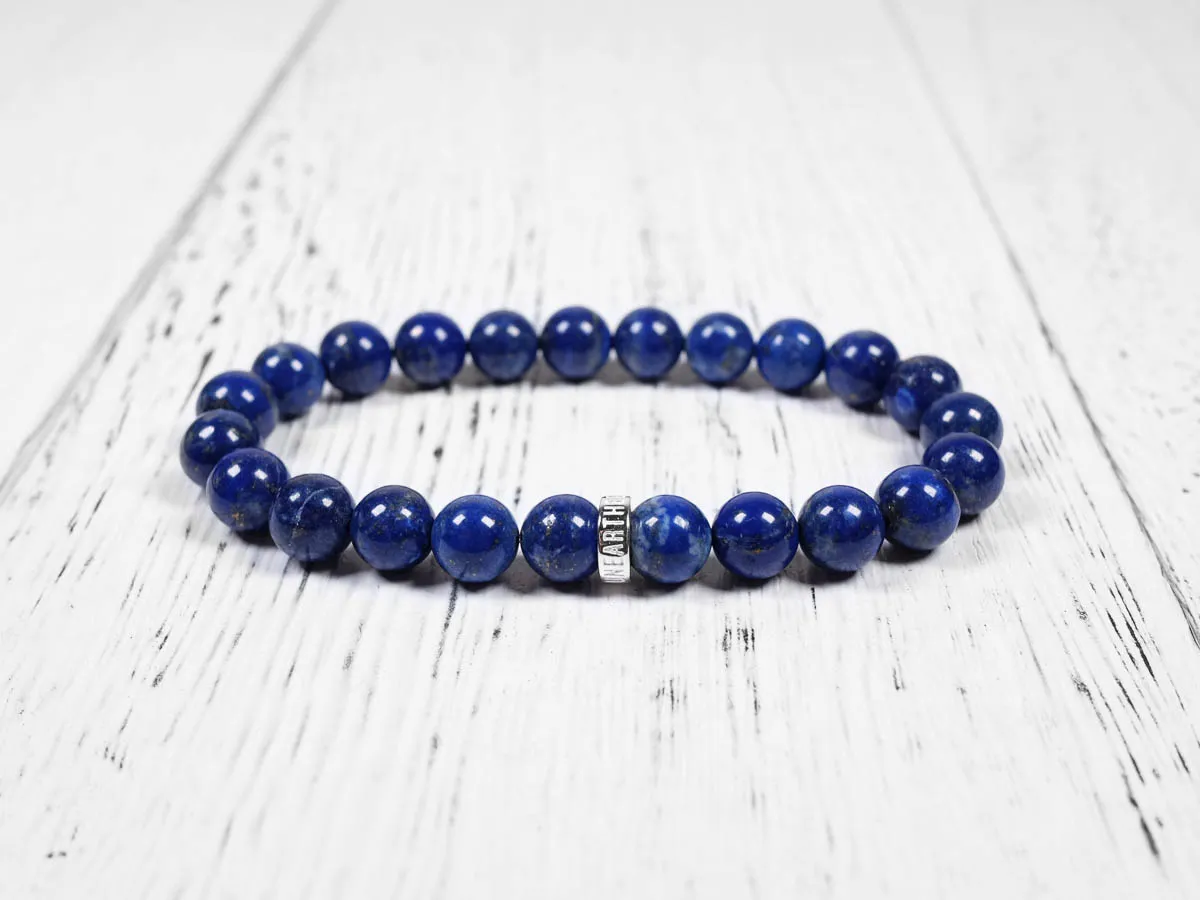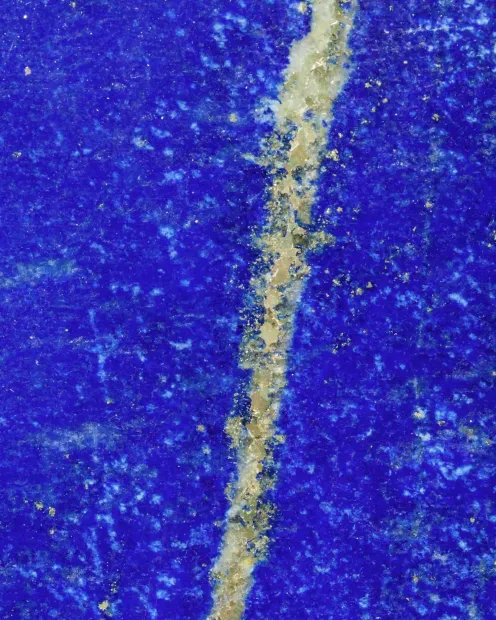
Dealing with lapis lazuli all the time, I often find myself getting lost in the details of the beautiful blue beads. You might have noticed that no two pieces look exactly the same.
Maybe you noticed that some have gold flecks, while others have white streaks within the blue stone.
In this article, I’m going to show you exactly what lapis lazuli is made of, why those little flecks matter for determining quality of this gemstone, and the interesting history behind the iconic blue colour.
Instead of just looking at the color, I’ll focus on the specific minerals that make up this unique stone.
Lapis Is A Rock, Not A Mineral
Most gemstones we deal with, like diamond, amethyst or sapphire, are minerals. This means they are made of a single crystal structure repeated over and over.
Lapis Lazuli is different. It is actually a rock (an aggregate) which is made up of a few different minerals.
Think of it like a fruitcake or a cocktail. It is a mix of several different ingredients formed together over millions of years. Here is a breakdown of the "recipe" inside this beautiful blue gemstone.
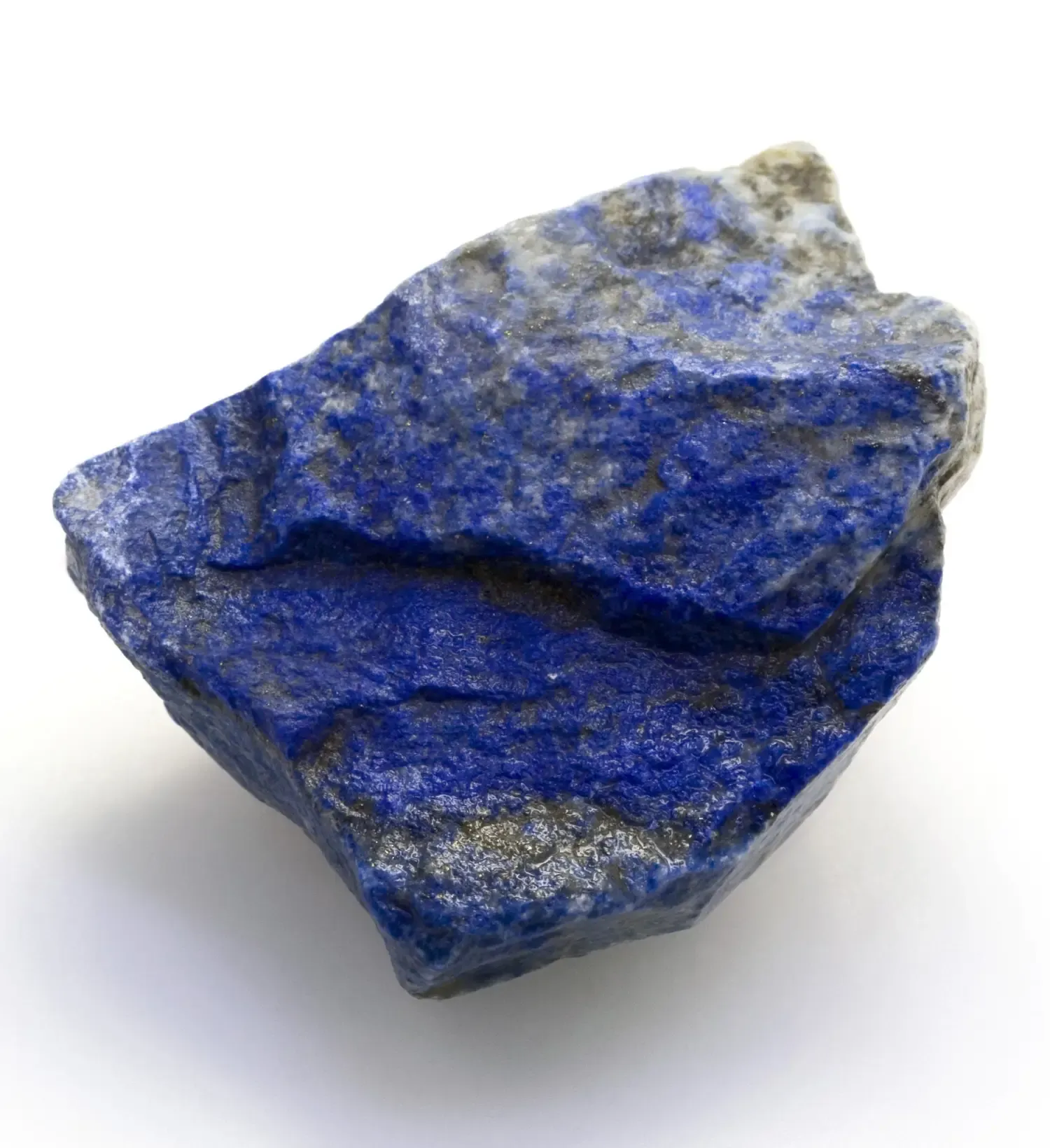
The Blue Base: Lazurite
The main ingredient is Lazurite (a sodium calcium aluminosilicate). This is what gives the stone that vibrant blue colour. Without Lazurite, you wouldn't have lapis lazuli.
Mixed in with this blue base, you will often find trace amounts of other minerals like Sodalite (which is also blue, but with more of a grey tone), Haüyne (rich blue), and Noselite. These "spices" give every individual piece its own unique depth and intensity of colour.
The "Gold": Pyrite
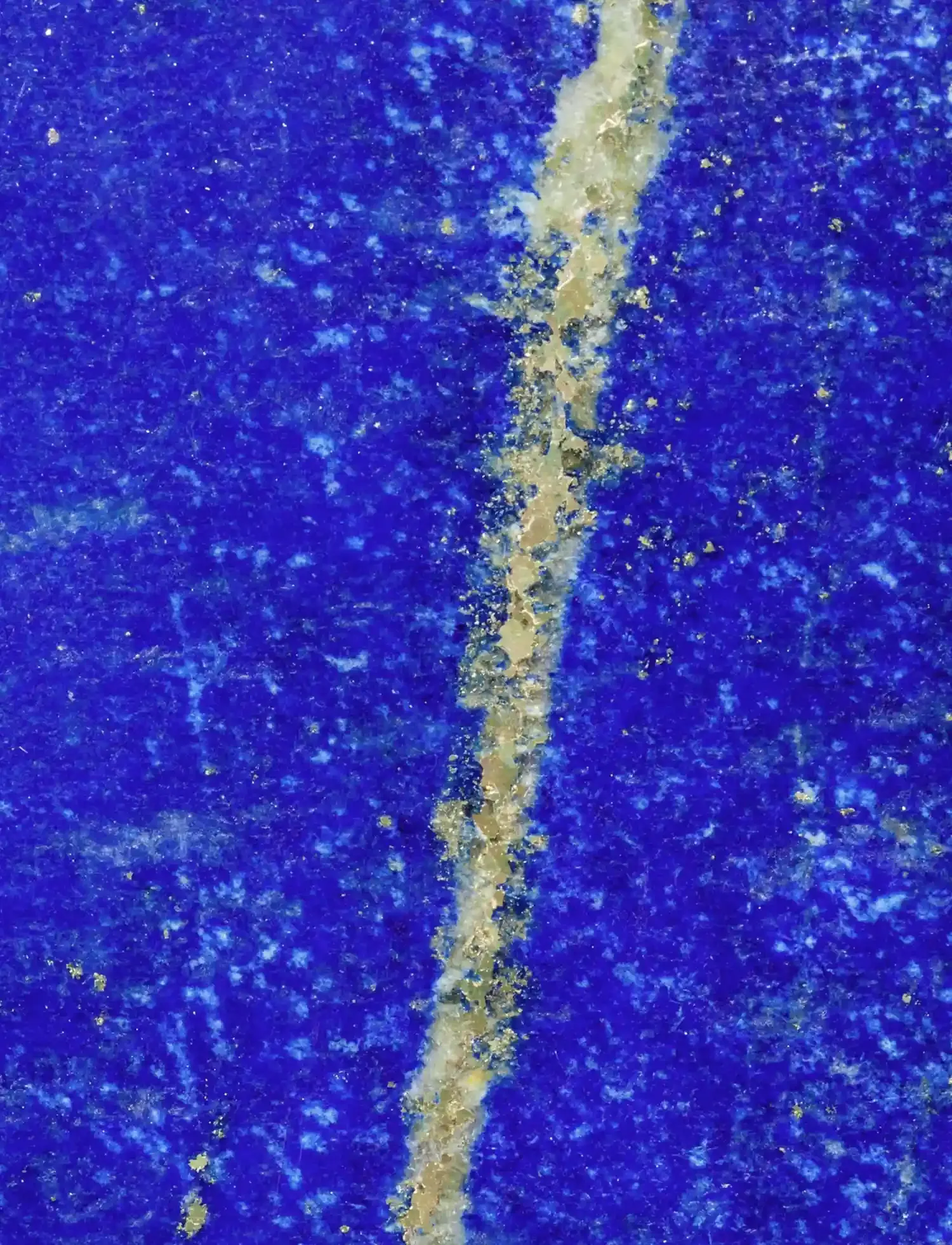
If you look at Lapis under a light, you will likely see glittering metallic flecks scattered across the surface like stars in the night sky. They are beautiful and one of my favourite parts of lapis lazuli.
These flecks are a mineral called pyrite, which is sometimes known as "Fool's Gold".
This brings us to an interesting grading paradox. Historically, the "perfect" lapis from ancient Persia was considered to be pure, unblemished blue with no specks at all. But modern buyers often prefer to see some Pyrite in the stone.
Why? Because it is the ultimate proof of authenticity. Synthetic or plastic imitations often struggle to replicate that random, metallic glitter. The metallic pyrite turns what used to be a "flaw" into a "feature" - proof that your stone was created by nature, not a factory. And who doesn't love a little sparkle in their gemstones?
The "White": Calcite
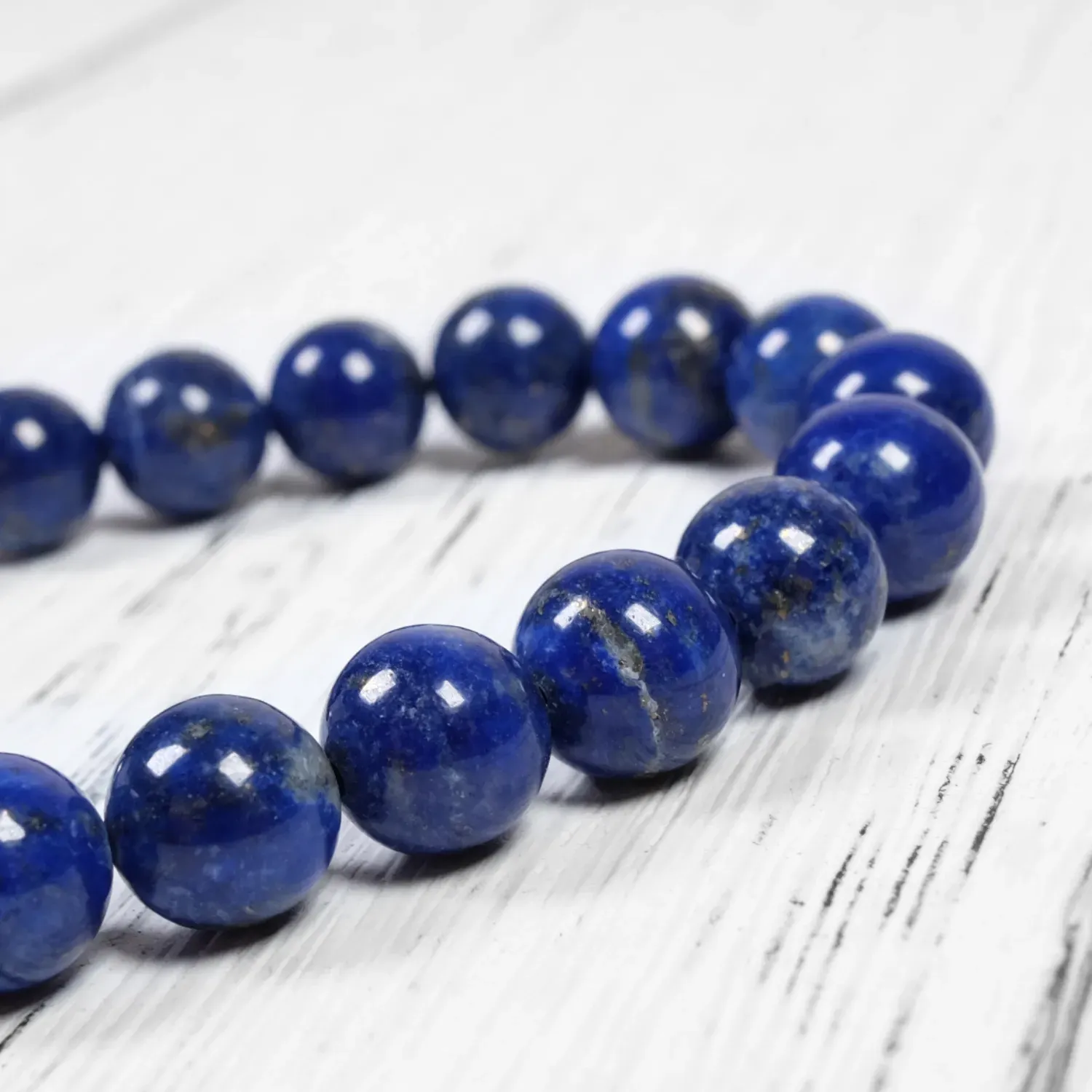
The third main ingredient you might spot is white calcite. This is the host rock (usually limestone or marble) where the Lapis originally grew. It appears as white veins, streaks, or cloudy patches within the blue.
While a little white veining can look nice aesthetically, in the gem trade, too much white is usually considered "lower quality" because it dilutes that famous deep blue color.
The Dye Warning
Because high-quality lapis is becoming rarer and more valuable, some manufacturers try to hide the white calcite by dyeing the stone blue. In the gemstone world, this is politely called "color-improved" lapis lazuli.
You can often spot this if the stone looks "flat" or lacks natural variation (or lacks any white at all). Real Lapis has depth in colour, while dyed Lapis often looks like a solid block of blue paint.
A Pigment More Expensive Than Gold
The name itself tells you what it is. "Lapis" is Latin for Stone, and "Lazuli" comes from the Persian Lāzhward, meaning Blue. It literally means "Blue Stone".
Before modern chemical paints were invented, the only way artists could create a vibrant, permanent blue paint was to take Lapis Lazuli and crush it into a fine powder. This pigment was called Ultramarine. During the Renaissance, this Lapis powder was so rare that it was more expensive than gold. Masters like Michelangelo used it sparingly, reserving it only for the most important parts of their paintings, like the robes of the Virgin Mary.
Today, you don't need a Renaissance painter's budget to own this stone. Whether you prefer a piece that is deep midnight blue or one dusted with the gold of pyrite, you are wearing a rock with a 6,000-year history.