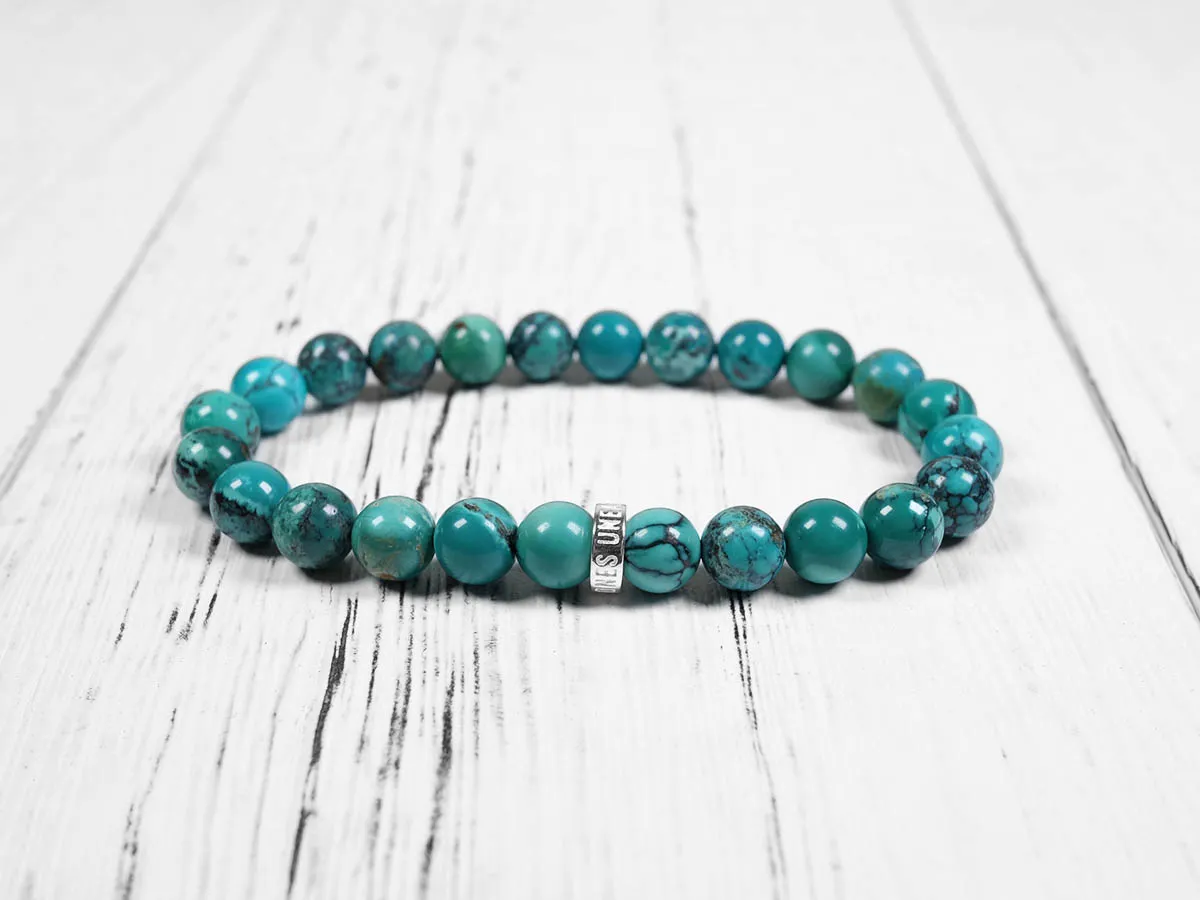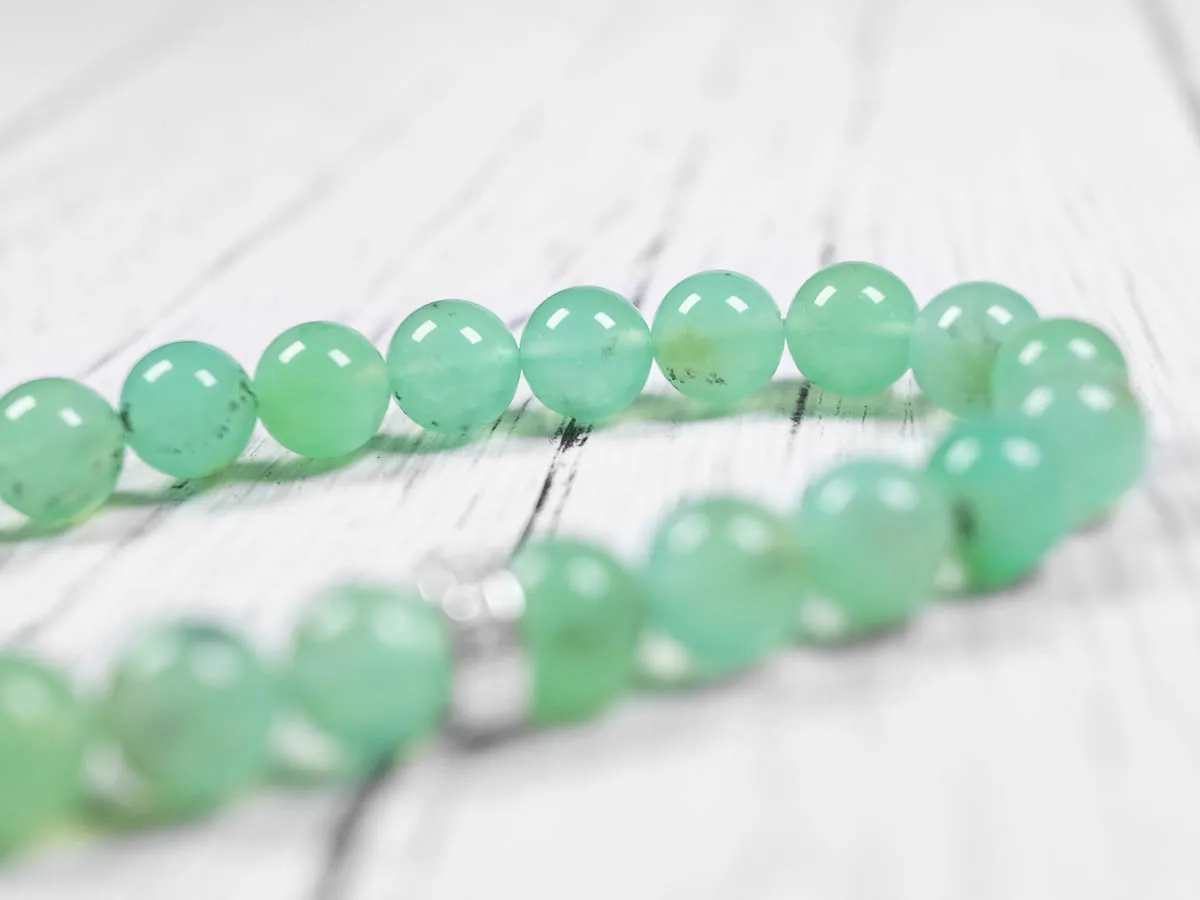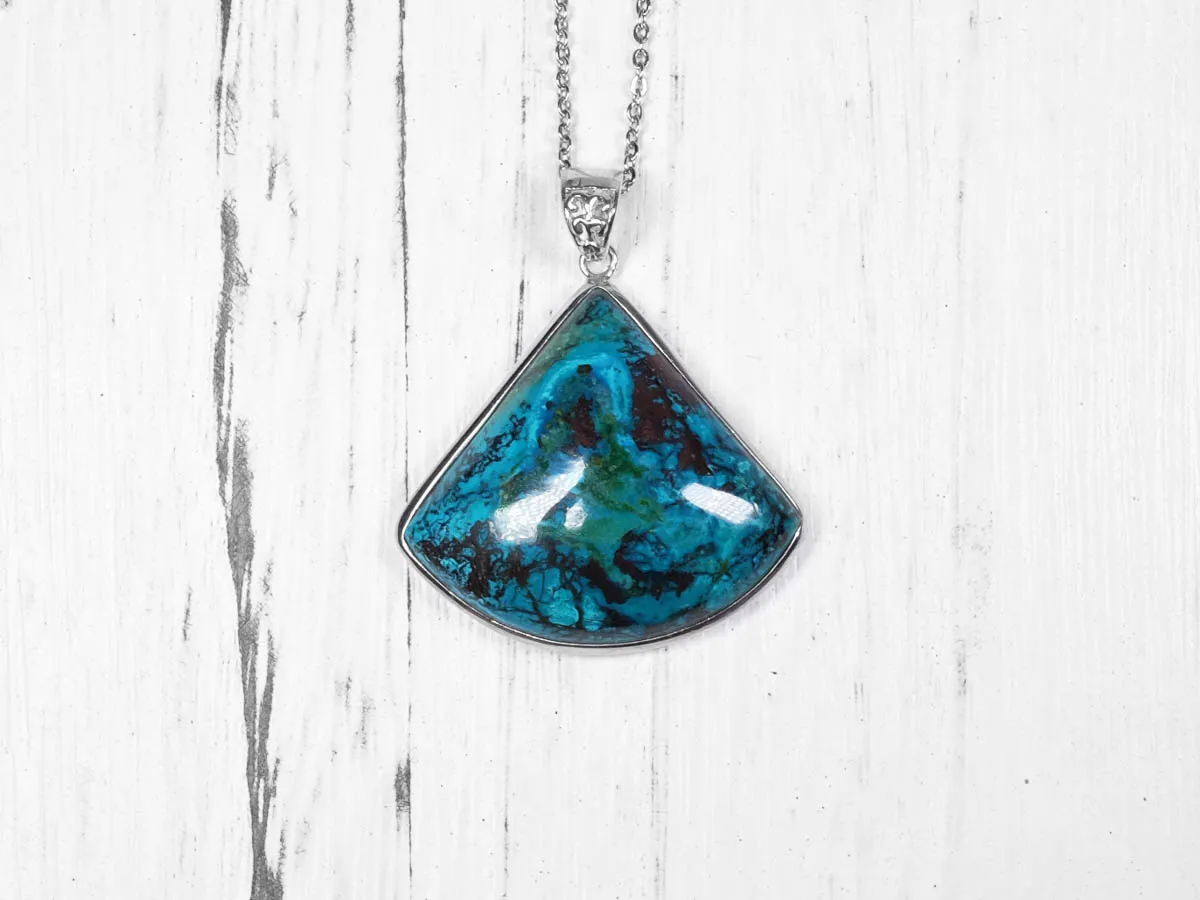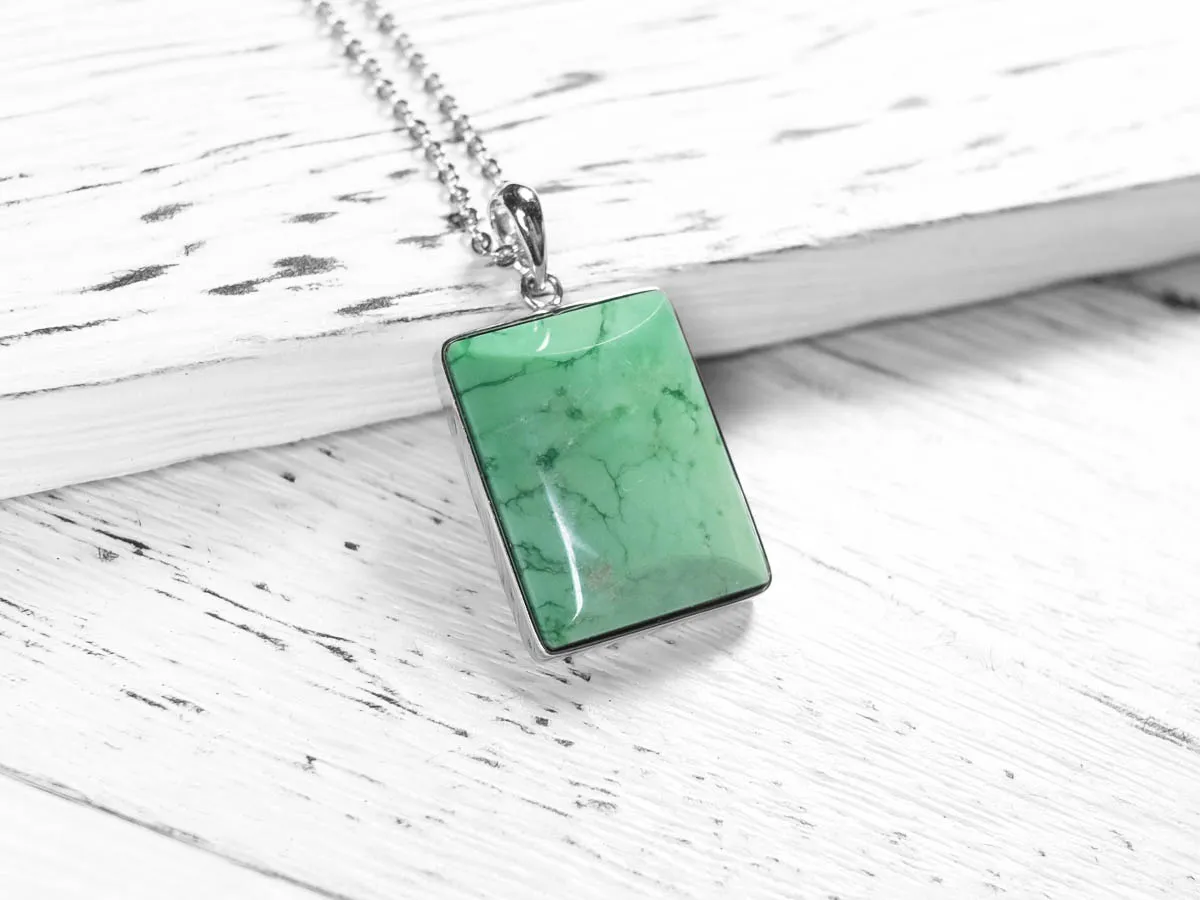
Variscite Jewelry
Turquoise's greener cousin. An apple-green phosphate laced with fine veining
Unearthed Gemstones Variscite Jewelry
Click the photos for a closer look of the jewelry pieces
Hardness
3.5 - 4.5 (Soft): Handle with care; Easily scratchable.
Toughness
Fair (Needs care — Vulnerable to knocks and sharp blows)
Mineral Family
Variscite (Phosphate)
Transparency
Translucent to Opaque
Crystal System
Orthorhombic
Lustre
Waxy
What Is Variscite?
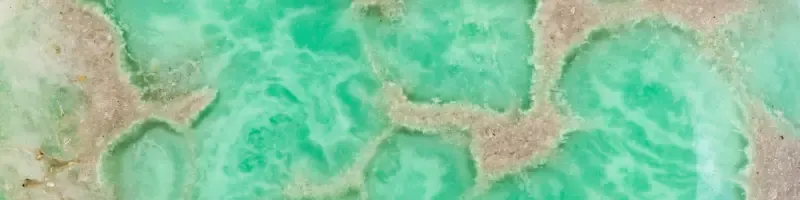
Variscite is a hydrated aluminium phosphate and turquoise's greener, quieter cousin, so alike in habit that old-timers called Utah material variquoise when the two intergrew. Its colour runs from pale mint to rich apple green, usually laced with fine grey or golden veining. The name comes from Variscia, the historical name for the Vogtland district of Germany where it was first described in 1837. The most celebrated material comes from Utah in the USA, with fine stone also from Nevada and Western Australia. Neolithic people in Europe were carving variscite beads thousands of years ago.
Is Variscite Durable Enough for Everyday Jewelry?
Variscite is soft and a little porous, around 3.5 to 4.5 on the Mohs scale, so treat it like fine turquoise: pendants, earrings and gently worn beads rather than daily rings. It is cut as cabochons and beads that show off the webbed green.
How to Care for Variscite Jewelry
Keep it away from heat, chemicals, cosmetics and long soaks, and wipe it with a soft, damp cloth.
How to Tell If Variscite Is Real
It is sometimes confused with chrysoprase and dyed imitations of both exist, so provenance from a trusted seller matters, and every stone we offer is genuine.
Gemstones Similar to Variscite
Turquoise is its close phosphate relative, and chrysoprase is the classic mix-up for its apple green.