

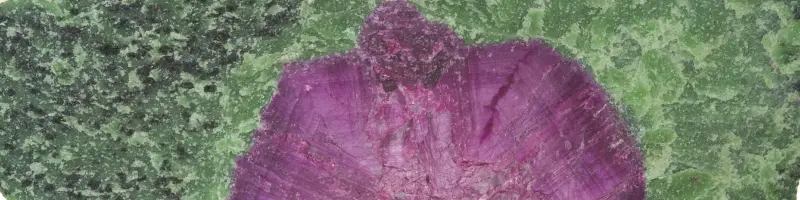


Ruby zoisite, also called anyolite, is a natural combination rock: opaque red ruby crystals embedded in vivid green zoisite, often accented with black patches of hornblende. The contrast looks almost too bold to be natural, but it absolutely is. It comes from one main locality near Longido in Tanzania, discovered in 1949, and the name anyolite is said to come from a Maasai word for green. The ruby here is true corundum, just not the transparent gem grade, which is exactly why big, dramatic pieces stay affordable.
The green zoisite host sits around 6 to 7 on the Mohs scale while the ruby patches are far harder, so the stone wears reasonably well but can wear unevenly and dislikes hard knocks. It is cut as cabochons, beads and especially carvings, where the colour contrast shines. Pendants and earrings are ideal, with rings for occasional wear. Clean it with warm, soapy water and a soft brush, and skip ultrasonic cleaners. Its ruby patches will even fluoresce red under UV light, a fun authenticity check.
Its red crystals are genuine ruby, and tanzanite is the blue gem form of the very same zoisite.


