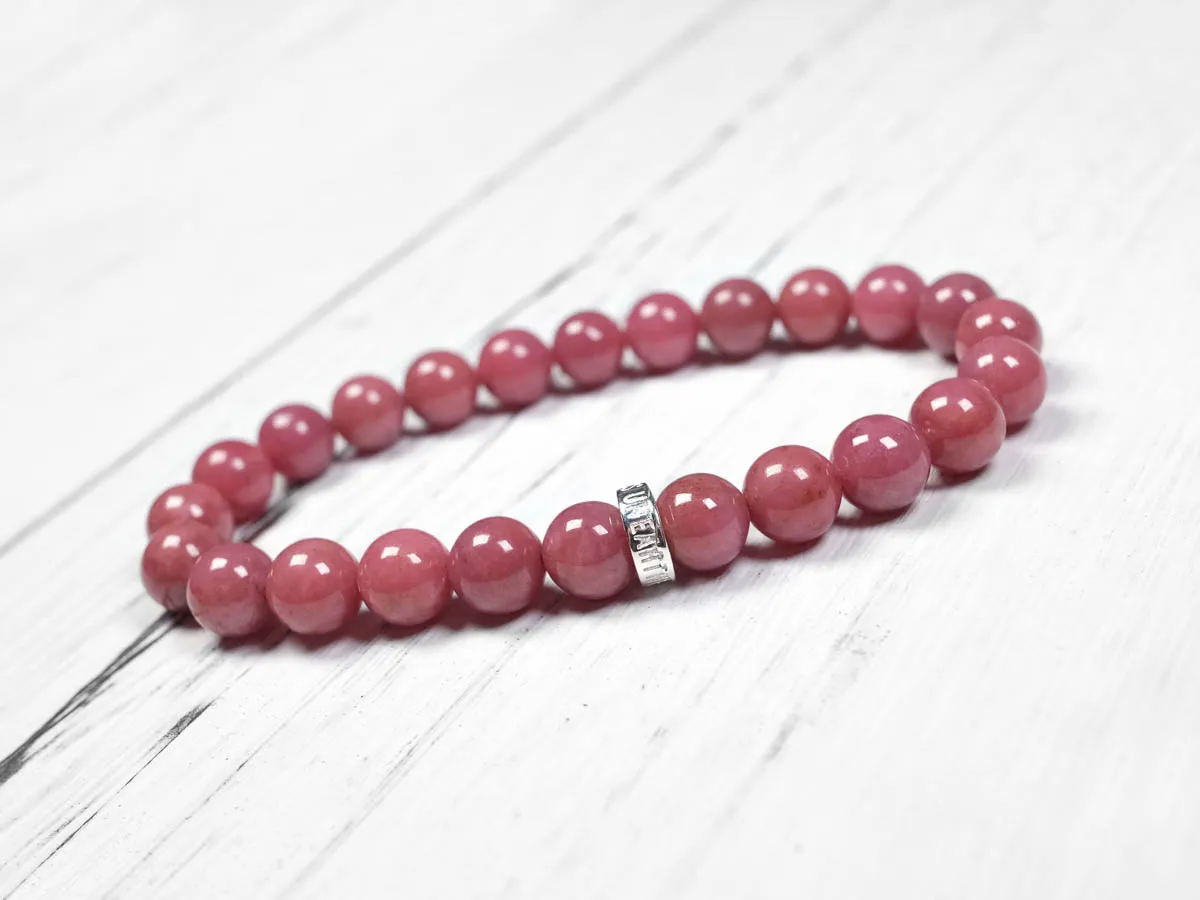
Rhodonite Jewelry
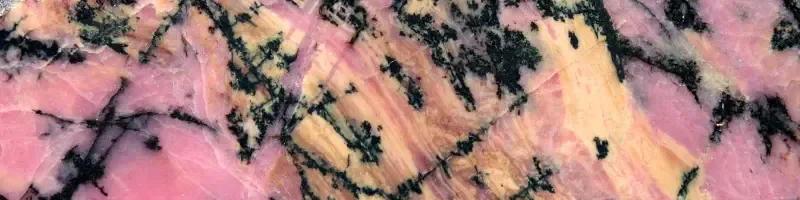
A rosy pink mineral webbed with striking black veins
Unearthed Gemstones Rhodonite Jewelry
Click the photos for a closer look of the jewelry pieces
Hardness
5.5 - 6.5 (Medium): Wear with care; This gemstone can dull over time.
Toughness
Fair (Needs care — Vulnerable to knocks and sharp blows)
Mineral Family
Rhodonite (Manganese Silicate)
Transparency
Translucent to Opaque
Crystal System
Triclinic
Lustre
Vitreous
What Is Rhodonite?
Rhodonite is a manganese silicate in rosy pink, almost always webbed with striking black veins of manganese oxide. The name comes from the Greek rhodon, meaning rose. It was hugely fashionable in nineteenth-century Russia, where enormous deposits in the Urals supplied carvings, columns and even a famous tsarina's sarcophagus. Fine material also comes from Australia (including rare transparent crystals from Broken Hill), Brazil, Peru and the USA. Massachusetts even made it the official state gem.
Is Rhodonite Durable Enough for Everyday Jewelry?
The massive material used in jewellery sits around 5.5 to 6.5 on the Mohs scale, harder and more forgiving than its look-alike rhodochrosite, though still not a stone for rough treatment. It is cut as cabochons, beads and carvings, and the pink-and-black contrast makes bold, graphic pieces. Rings are fine for careful wear; pendants and earrings are carefree.
How to Care for Rhodonite Jewelry
Clean it with warm, soapy water.
Rhodonite vs Rhodochrosite: How to Tell Them Apart
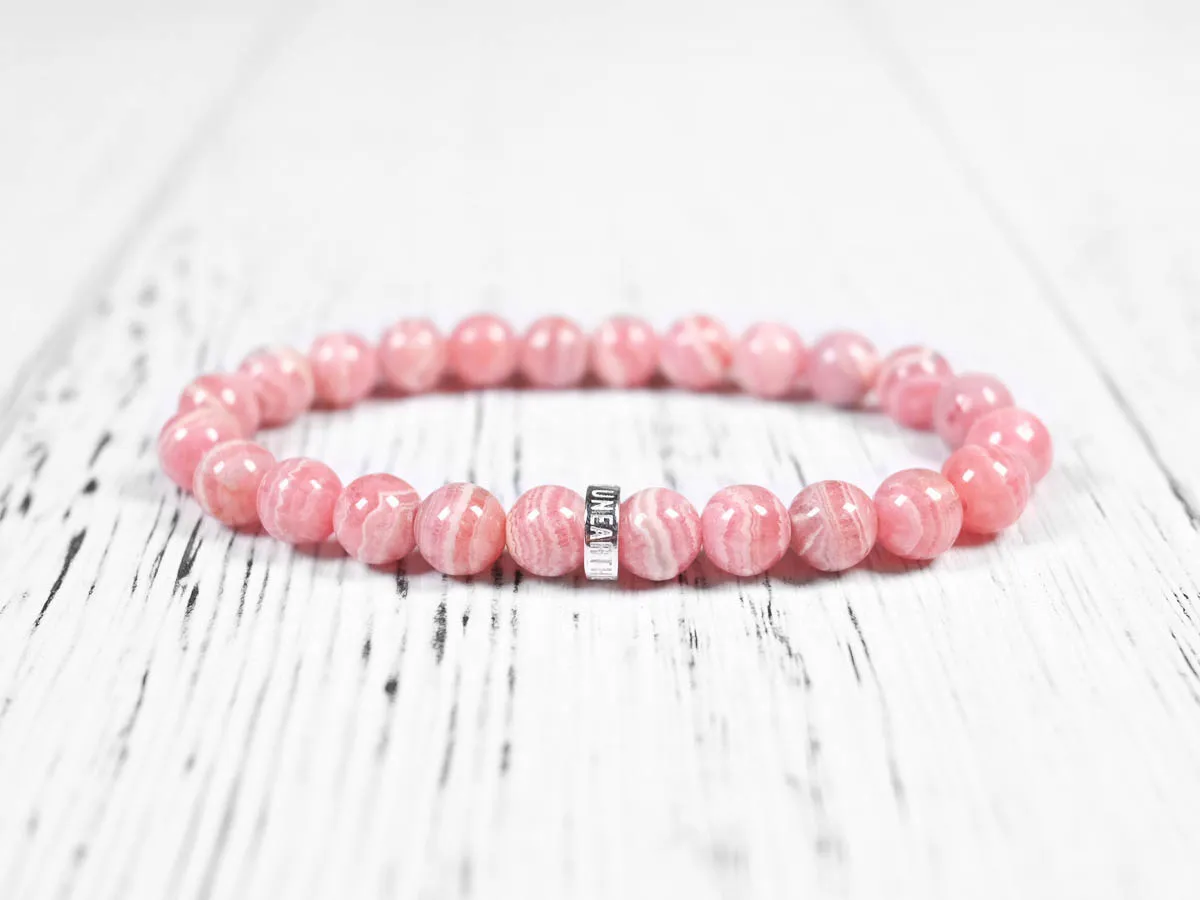
Telling it from rhodochrosite is easy: rhodonite has black veins, rhodochrosite has white to pink bands.
Gemstones Similar to Rhodonite
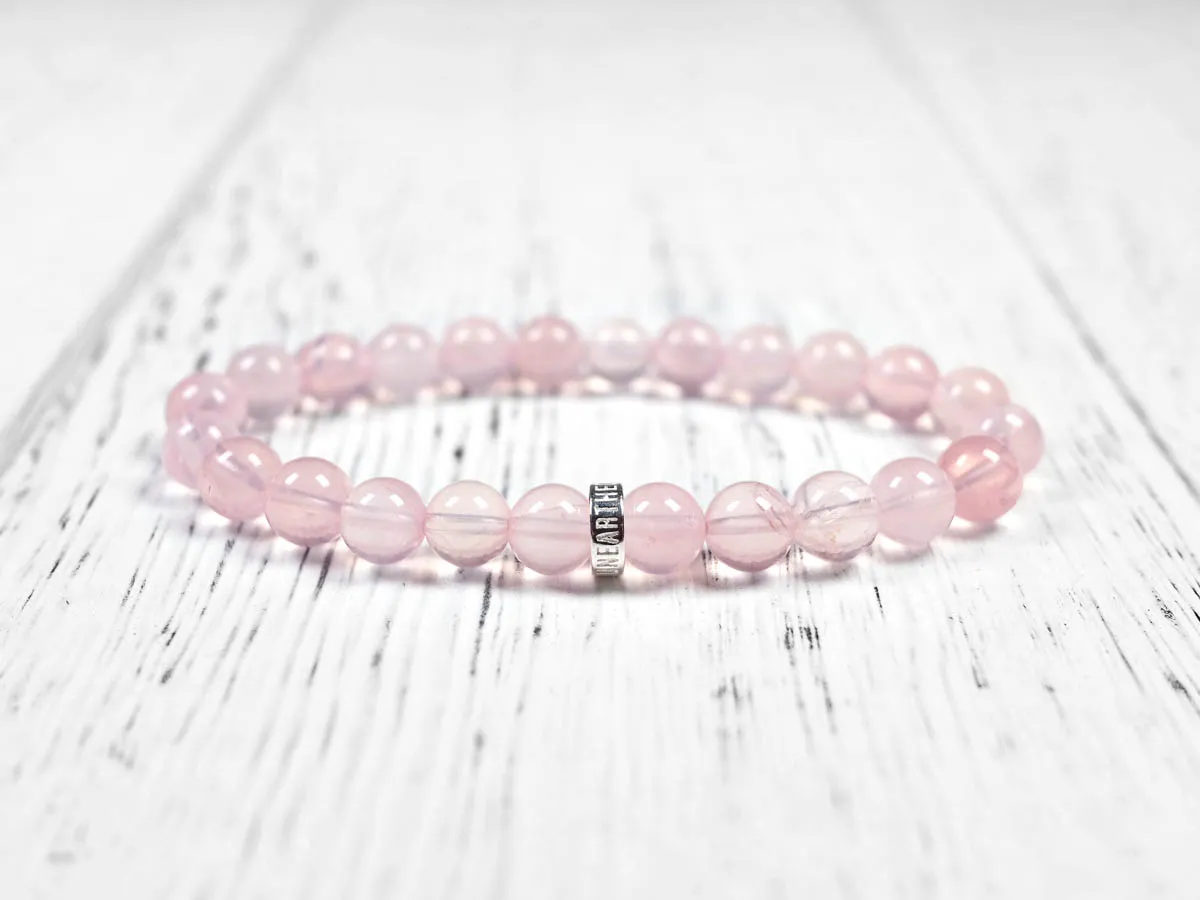
Rhodochrosite is its softer lookalike; rose quartz matches the pink with more transparency but without the black veins.