

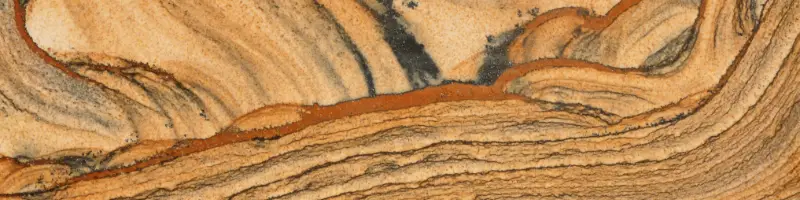


Picture jasper is a form of opaque chalcedony whose bands, swirls and dendrites happen to paint tiny landscapes: desert mesas, rolling dunes, distant hills under banded skies. The scenes are created by layers of iron and clay-rich sediment that were later silicified into stone. The most famous material comes from the American Northwest, especially Biggs jasper from Oregon and Owyhee jasper from the Oregon-Idaho border, with handsome material also from Namibia. Collectors hunt individual stones the way others hunt paintings.
Like all jaspers, it is practical: 6.5 to 7 on the Mohs scale, good toughness, and no special care beyond warm, soapy water. It is cut as cabochons and slabs, with cutters framing the best scenery like little canvases. It suits bold rings, pendants and belt buckles, and it has a loyal following in western-style jewellery. Since the value is all in the picture, judge stones by the beauty of the scene rather than the name on the label.
Fellow scenic jaspers, each of them resembles a different painting.


