

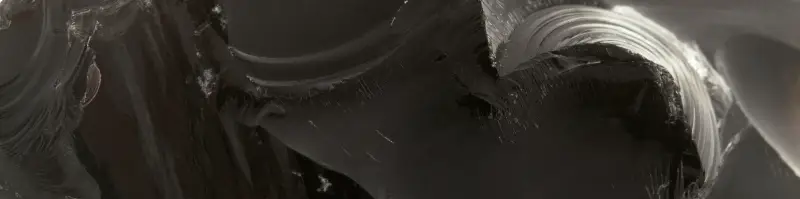


Obsidian is natural volcanic glass, formed when lava cools so quickly that crystals never get the chance to grow. That glassy structure lets it fracture into edges sharper than surgical steel, which is why ancient peoples from the Aztecs to early Mediterranean cultures prized it for blades and mirrors. Most obsidian is jet black, but nature offers variations: snowflake obsidian with white crystal patches, mahogany obsidian streaked with red-brown, and sheen or rainbow obsidian that glows with layered colour. Major sources include Mexico, the USA and Armenia.
As a glass, obsidian is brittle and sits around 5 to 5.5 on the Mohs scale, so it chips more easily than crystalline gems. It suits pendants, earrings and beads better than everyday rings. It is cut as cabochons, beads and striking carvings, and polished faces take on a deep, wet-looking shine.
Clean it with warm, soapy water and a soft cloth, and store it away from harder stones that could scratch it.
Man-made coloured glass is sometimes sold as obsidian, particularly bright blue or green pieces, so treat neon colours with suspicion.
Moldavite is its glassy cousin from a meteor impact; a dark smoky quartz offers a similar look with more durability.


