

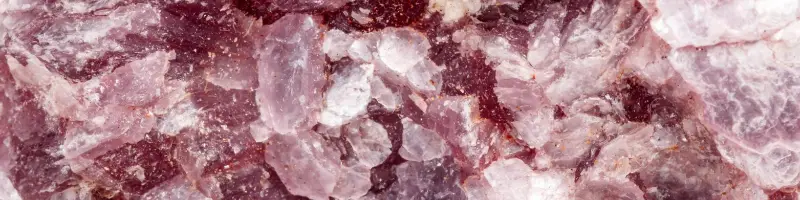

Lepidolite is a lilac to rose-violet mica, and its pretty colour comes from lithium, an element it holds so much of that it has been mined as lithium ore. The name comes from the Greek for scale, after its sparkly, flaky crystal structure. As a gem, the best material is the massive form, often naturally intergrown with quartz, which makes it far more workable. Major sources include Brazil, Madagascar, Zimbabwe and California. Fun fact: rubidium, an element used in atomic clocks, was discovered in lepidolite.
On its own, lepidolite is very soft, around 2.5 to 3, so most jewellery pieces use the quartz-rich material, which handles polishing and wear far better. Even then, treat it as a gentle-wear stone: pendants, earrings and beads rather than everyday rings. Its shimmering, pearly lilac surface is the giveaway that you are holding real lepidolite. Keep it dry where possible, avoid chemicals and ultrasonic cleaners, and wipe it clean with a soft cloth.
Kunzite is another lithium mineral, while charoite and sugilite share a similar purple palette.


