

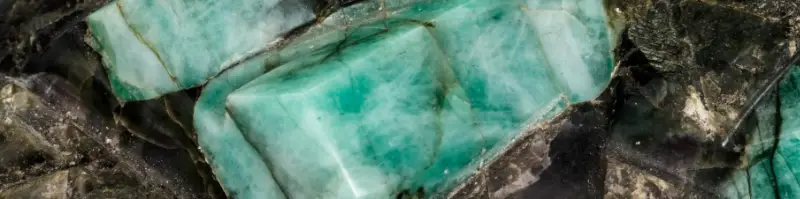


Emerald is the deep green variety of beryl, coloured by traces of chromium or vanadium. It has been adored for at least 4,000 years: Cleopatra famously claimed Egypt's emerald mines as her own. The finest stones come from Colombia, with Zambia and Brazil as other major sources, and it is the birthstone for May. Almost all emeralds contain visible inclusions, which the trade poetically calls the jardin, French for garden. Rather than flaws, they are part of each stone's fingerprint.
Emerald is hard, at 7.5 to 8, but it is also brittle, so it needs more care than its hardness suggests. Nearly every emerald is treated with oil or resin to improve clarity, an ancient and accepted practice that should always be disclosed. Because of that, never clean an emerald in an ultrasonic machine or with solvents; just use lukewarm, soapy water and a soft cloth. Protective settings are wise for rings. Synthetics and green glass are common, so certification and a trustworthy seller matter here more than almost anywhere.
Aquamarine and morganite are its beryl siblings, while chrome diopside offers a similar deep green for less.


